Mary Boykin Chesnut Quotes
Awful newspapers today. Fort Donelson a drawn battle. You know that means in our mouths that we have lost it.
General Grant had just accepted the “Unconditional Surrender” of the 15,000 Confederate troops and 48 large cannon. Yet the South described the battle as a “standoff” and a “draw”. This quotation is very significant because it illustrates two very important dynamics of the Confederacy. First that the Southerners consistently lied to themselves and to each other about their situation in the war. Whether this was the elite manipulating the mass of the people or large scale self-delusion by most has been debated since. Second, Chesnut’s statement illustrates that it was common knowledge that the reports about the war were false and exaggerated for the Confederate side and just part of the extensive propaganda campaign of the Confederacy.
Mary Boykin Chesnut, 1823-1886, Wife of South Carolina U.S. Senator, Confederate Army General, James Chesnut, Jr. Diary Entry, February 15, 1862
Sourced by: Eigen's Political and Historical Quotations

She was not alleging parity of the two sides here. While many of the military of the North tried to put the best face on battles, the Northern newspapers were actually savage about reporting Union casualties and battles lost—often exaggerating the ineptitude of the Union military leaders. In the South however, in most cases where there was a Union Victory the Southern papers reported it as a hard fought, high casualty, narrow victory for the South. The major Northern newspapers would also claim a Union victory hence her quotation. However, later she and many other educated Southerners really understood the that the South—all the institutions and most people tended to be in denial about the war. See {633930} for her more realistic view late the following year.

That is the way he was killed. The phrase, “We are bound to believe that, anyhow” indicates that Stuart really realized how futile the Southern war effort would be but loyalty and patriotism required him to suspend his rational belief structure.

Much of the South was so insular that people knew nothing about the notion of abolition and just assumed that no one would ever consider freeing the slaves. Many never knew that it was the South that first fired on the Union troops and flag. If the North won the war, the assumption was that Northerners would then own the plantations and the valuable slaves. In reality, while all slaves were emancipated in the South, very few plantations and farms were confiscated from their Southern owners by Northerners despite the fact that there was political pressure in the North to confiscate the land of all rebels who had committed treason and use the value to repay the Union bonds and care for the wounded Union veterans and the widows of dead Union Soldiers. Eggleston was an accomplished writer who had served in the Confederate army of the Civil War. 20 year after the war he wrote a series of articles for the prestigious Northern Atlantic Monthly trying to convey the war from the Southerner’s point of view.

This quotation is historically very interesting. Southern educational materials were extremely scarce with paper one of the commodities most in short supply as the only book paper in the South came from England and had to be smuggled through the Union blockade. Yet the priority was so high that paper was made available in the midst of the Civil War. Confederate civilian morale was a very serious problem while at the same time large numbers of Southern civilians and military were delusional about the Confederate fighting capability. Central to that theme was the myth that the Southern soldier, fighting for such a righteous cause, was several times more effective than his Yankee counterpart. Therefore, the fact that the South was outmanned, out gunned, and out supplied, did not imply a Union victory. So teaching this to the young Southern children who would spread it to the adults on the home front, was a conscious Confederate propaganda effort at this time. Also, the use of these kinds of death and killing arithmetic problems for young children, while considered patriotic in the South was thought to be gross, crude, uncivilized and unchristian by most in the North. The implied 90 to 1 superiority ratio was laughed at in the North, but actually believed by a substantial number of Southerners.


When he referred to "the noose" he was connoting one of the major ways the Southern Segregationists and racists maintained white supremacy and Jim Crowe after the Civil War: Lynching. They terrorized blacks and whites who had different views by kidnapping their victims, torturing them, hanging them, and often mutilating their bodies after the murder. They never were convicted because the Southern law enforcement officers were often part of the lynch mob, the judges were usually themselves racist segregationists, and if jurors voted to convict in the few cases that went to trial, they themselves were risking lynching. From 1882-1968, 4,743 lynchings occurred in the United States. Of these people that were lynched, 3,446 were black.


The Virginia Campaign of May 1864 was clearly the beginning of the end of the war. This was clear at the time, not only to the military leaders of both sides, but also to the media and thence the general public in the North. At the beginning of the war the Army of the Potomac, the largest Union Army was commanded by McClellan whose concerns were with his own political career and not winning the war. He had an aversion to heavy fighting and did not see the war strategically as Lincoln, Grant and Sherman did: To cripple the capacity of the South to wage war. So the early history of the Army of the Potomac was a series of undecisive battles which were either standoffs or the Confederates won despite the much larger and better armed and equipped Union army. As soon as McClellan was replaced, things began to turn around and when Grant was selected for Command of all Union Troops, the Army of the Potomac performed much better, including taking Richmond, the Confederate Capital.
Eggleston was an accomplished writer who had served in the Confederate army of the Civil War. 20 year after the war he wrote a series of articles for the prestigious Northern Atlantic Monthly trying to convey the war from the Southerner’s point of view.


Eggleston was an accomplished writer who had served in the Confederate army of the Civil War. 20 year after the war he wrote a series of articles for the prestigious Northern Atlantic Monthly trying to convey the war from the Southerner’s point of view.


Seward, the newly appointed Secretary of State was extremely concerned that if the radical direction that many of the Southern States were moving in turned into a Civil War, that the Union should not be seen as the precipitating initiator. His policy was followed and the secessionist extremists, not so politically sensitive, attacked Fort Sumter and became the initiator of the war so far as public opinion was concerned domestically and internationally. It was very important for the Union effort that the Confederates by seen as a group of radicals rebelling against the authority of a legitimate state. If that was the case, any effort to aid or help the South could be seen as an unfriendly act of war against the United States. Conversely, the South would have liked to be seen as an independent nation, no longer connected to the United States and entitled to diplomatic relations and foreign trade with all other nations. But the attack on Fort Sumter made that position much harder to maintain.

At this point, there had hardly been any fighting and no outrages or war crimes were yet committed by either side. These would come later—more on the Confederate side as they did not want to take the limited resources they had from their troops to fulfil abstract obligations to prisoners of war or to civilians. A few deliberately chose to use terror tactics. The Union troops also at various points in the war got out of hand and looted personal property of civilians. But at this point, this proclamation was just lies and propaganda.
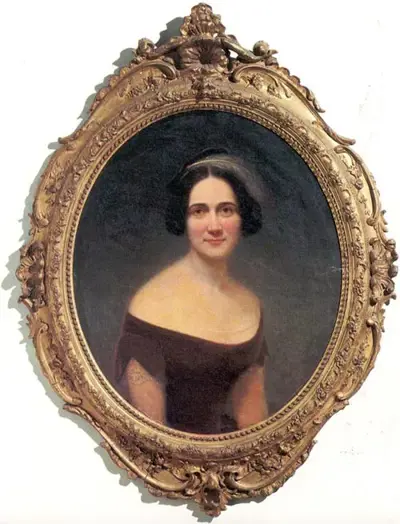
- Born: March 31, 1823
- Died: November 23, 1886
- Nationality: American
- Profession: Author
Mary Boykin Chesnut (née Miller) was an American author noted for a book published as her Civil War diary, a "vivid picture of a society in the throes of its life-and-death struggle." She described the war from within her upper-class circles of Southern planter society, but encompassed all classes in her book. She was married to a lawyer who served as a United States senator and Confederate officer. Chesnut worked toward a final form of her book in 1881–1884, based on her extensive diary written during the war years. It was published in 1905, 19 years after her death. New versions were published after her papers were discovered, in 1949 by the novelist Ben Ames Williams, and in 1981 by the historian C. Vann Woodward. His annotated edition of the diary, Mary Chesnut's Civil War (1981), won the Pulitzer Prize for History in 1982. Literary critics have praised Chesnut's diary—the influential writer Edmund Wilson termed it "a work of art" and a "masterpiece" of the genre—and the most important work by a Confederate author.
