George Cary Eggleston Quotes
The Southern army … was simply a vast mob of rather ill-armed young gentlemen from the country.
Eggleston was an accomplished writer who had served in the Confederate army of the Civil War. 20 year after the war he wrote a series of articles for the prestigious Northern Atlantic Monthly trying to convey the war from the Southerner’s point of view.
George Cary Eggleston, 1839-1911, Writer & Confederate Soldier, “A Rebel's Recollections”, The Atlantic Monthly, 1874
Sourced by: Eigen's Political and Historical Quotations


Much of the South was so insular that people knew nothing about the notion of abolition and just assumed that no one would ever consider freeing the slaves. Many never knew that it was the South that first fired on the Union troops and flag. If the North won the war, the assumption was that Northerners would then own the plantations and the valuable slaves. In reality, while all slaves were emancipated in the South, very few plantations and farms were confiscated from their Southern owners by Northerners despite the fact that there was political pressure in the North to confiscate the land of all rebels who had committed treason and use the value to repay the Union bonds and care for the wounded Union veterans and the widows of dead Union Soldiers. Eggleston was an accomplished writer who had served in the Confederate army of the Civil War. 20 year after the war he wrote a series of articles for the prestigious Northern Atlantic Monthly trying to convey the war from the Southerner’s point of view.


Buchanan us considered by most historians to have been the worst or one of the worst Presidents of the United States. At this point, he was a lame duck president with Abraham Lincoln, the President Elect soon to take office. This speech, just encouraged the South more than ever and helped to bring about the Civil War. His vacillation and lack of any leadership on the slavery question exacerbated the polarization that was tearing the nation apart.

The Southern states were illegal rebels. A confederacy had always meant a voluntary association of otherwise independent entities. However technically the Southern states were not independent but in a state of illegal rebellion against the United States. Lincoln, a lawyer, could not being himself to refer to the South by their preferred name—the Confederacy. So this was how he and many in his administration referred to the South.


The Governor was a staunch Confederate supporter but his state legislature majority favored the Union. He was forced out of the governorship when the 1861 election gave the legislature a veto-proof pro Union majority.


Seward, the newly appointed Secretary of State was extremely concerned that if the radical direction that many of the Southern States were moving in turned into a Civil War, that the Union should not be seen as the precipitating initiator. His policy was followed and the secessionist extremists, not so politically sensitive, attacked Fort Sumter and became the initiator of the war so far as public opinion was concerned domestically and internationally. It was very important for the Union effort that the Confederates by seen as a group of radicals rebelling against the authority of a legitimate state. If that was the case, any effort to aid or help the South could be seen as an unfriendly act of war against the United States. Conversely, the South would have liked to be seen as an independent nation, no longer connected to the United States and entitled to diplomatic relations and foreign trade with all other nations. But the attack on Fort Sumter made that position much harder to maintain.

This quotation is very important for in the 20th century Southern revisionists made a major effort to ennoble the Confederate cause by claiming that Slavery and the desire to keep Blacks in bondage and unequal was just of byproduct of the reason for secession—States Rights and the decentralization of government. Many of the school history books were changed to reflect this claim. However, each of the seceding states left a legislative record of secession and the reasons for it. In all cases, Slavery and the preservation of Slavery in the South was the central and in most cases the only reason stated. In this case, Texas made its reasons clear. There was nothing noble therein but racism and racial exploitation.


The American Civil War was followed by intellectuals throughout the world. Most were offended by the immorality of the slavery that the South was fighting to maintain, but admired the way they organized and fought for their principles.


He was Chancellor of the Exchequer at the time of this speech. Gladstone was certain about most of his views on foreign policy but correct on only some with many blunders on his watch. This view was very important for the Confederacy as it was a prerequisite to diplomatic recognition. The latter never came.

The early Union military leadership was so poor and timid that it was not clearly demonstrated that a Confederacy was not viable until later in the war, and the Southerners possessed an extraordinary capacity for ignoring reality and self-delusion, that it was not demonstrated until Grant’s major victories and Sherman’s March through Georgia and the Southern East Coast that an independent South was not going to be.

In many respects, it is amazing that secession did not take place earlier.
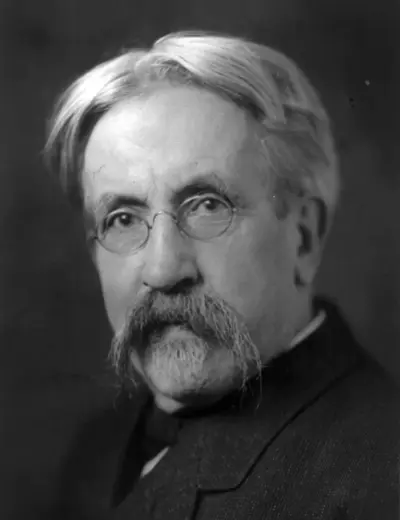
George Cary Eggleston American author and brother of fellow author Edward Eggleston (1837–1902). Sons of Joseph Cary Eggleston and Mary Jane Craig. After the American Civil War he published a serialized account of his time as a Confederate soldier in The Atlantic Monthly. These serialized articles were later collected and expanded upon and published under the title "A Rebel's Recollections."
