James Longstreet Quotes
General Pickett, finding the battle broken while the enemy was still reinforcing, called the troops off.
Longstreet, James. From Manassas to Appomattox: Memoirs of the Civil War in America. J. B. Lippincott Company, 1896, p. 394.

Two days later Lee surrendered at Richmond, and the Civil War was over. On April 14, Lincoln was assassinated. He died the next day.


His aggressive tactics which had served him so well in the West got his army into trouble at the Second Battle of Bull Run, where he was out maneuvered by Stonewall Jackson and Robert E. Lee. He was sent back to the West.


Referring to Lincoln's Secretary of War, Edwin M. Stanton, who was a forceful administrator constantly telling all others what to do:
When George B. McClellan was commander of the Union army, he maintained a very conservative military strategy and would not initiate any attacks. Lincoln wrote:

The Civil War produced more deaths than all other American wars put together. Lee’s skill and gentlemanly demeanor subdue the fact that his treasonous efforts caused more American soldiers to die than the entire Second World War—and yet some Americans regard him as a hero while others see him as a traitor.
McClellan liked to parade and drill his troops but not fight them. Lincoln wanted him to take the offensive but the general always found an excuse not to. Many historians believe that McClellan wanted the war to end, the South to rejoin the Union and be allowed to maintain slavery. Others feel that he was just a military man who maintained his popularity by minimizing casualties. Finally, Lincoln fired McLellan and the complexion of the war changed thereafter. McClellan ran against Lincoln for the Presidency in 1864. See {633923}

General Grant had just accepted the “Unconditional Surrender” of the 15,000 Confederate troops and 48 large cannon. Yet the South described the battle as a “standoff” and a “draw”. This quotation is very significant because it illustrates two very important dynamics of the Confederacy. First that the Southerners consistently lied to themselves and to each other about their situation in the war. Whether this was the elite manipulating the mass of the people or large scale self-delusion by most has been debated since. Second, Chesnut’s statement illustrates that it was common knowledge that the reports about the war were false and exaggerated for the Confederate side and just part of the extensive propaganda campaign of the Confederacy.


This cry echoed throughout the North where the public wanted a full invasion of the capital of the Confederacy to put an end to the rebellion. However is was not clear what effect that would have on the Border States—Maryland and Kentuucky—and many politicians thought that the South would “come to its senses” once they realized what they had done. But the South would not change its course, and the Union Generals in Command were very reluctant to actually invade the South. It was only after the South attacked in the North that the Union Military began to realize that this was a Civil War that would not be resolved politically.
This is one of the best summaries of Lincoln’s early strategic thinking about the war. Unfortunately for him and the country, his generals were all trained in tactics rather than strategy. And the then modern world placed industry, logistics, and economics on a par with battlefield tactics. Until Generals Grant and Sherman were elevated to higher command, there were no military leaders who thought about the war in overall strategic terms. Lincoln, Grant, and Sherman in a sense created the first strategic approach to modern warfare.

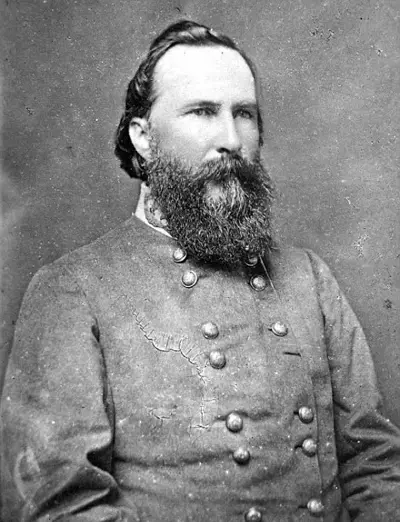
James Longstreet was an American soldier and diplomat. He was one of the foremost Confederate generals of the American Civil War and the principal subordinate to General Robert E. Lee, who called him his "Old War Horse". He served under Lee as a corps commander for most of the battles fought by the Army of Northern Virginia in the Eastern Theater, and briefly with Braxton Bragg in the Army of Tennessee in the Western Theater.
