PIERRE GUSTAVE TOUTANT BEAUREGARD
(Pierre Gustave Toutant-Beauregard)
At this point, there had hardly been any fighting and no outrages or war crimes were yet committed by either side. These would come later—more on the Confederate side as they did not want to take the limited resources they had from their troops to fulfil abstract obligations to prisoners of war or to civilians. A few deliberately chose to use terror tactics. The Union troops also at various points in the war got out of hand and looted personal property of civilians. But at this point, this proclamation was just lies and propaganda.
Julius Jacob von Haynau, 1786–1853, was a vicious Austrian General who had committed many atrocities in Italy and Hungary which today would be considered War Crimes and Crimes Against Humanity. He even had women publicly flogged who were heard saying anything sympathetic about the freedom fighters who the General suppressed brutally. Haynau was known and despised by military men the world over. So many of the Confederate and Union officers understood the insult. General Butler was not accused of atrocities of the usual type, but as the Commanding Union General of New Orleans, he was not very chivalrous to the Southern women of the city who were particularly effective in harassing the Union Officers and men. For example, the women would store the urine and feces of the chamber pots of the house and wait until Union soldiers, preferably officers, walked by and unloaded the waste on them from upper story windows. Butler ordered that women who harassed the soldiers could be “treated like common prostitutes.” Butler also turned a blind eye to the looting of the activist women’s silver and other valuables.
Looting by marauding troops existed on both sides in the Civil War. However. much of the looting and the worst atrocities were committed by deserters of both armies.
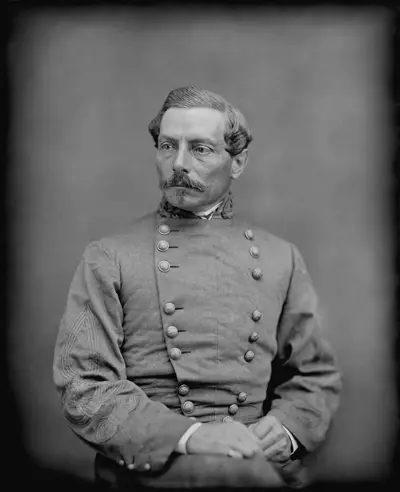
Pierre Gustave Toutant-Beauregard was a Confederate general officer who started the American Civil War by leading the attack on Fort Sumter on April 12, 1861. Today, he is commonly referred to as P. G. T. Beauregard, but he rarely used his first name as an adult. He signed correspondence as G. T. Beauregard.
