William Tecumseh Sherman Quotes
You or any fair man, looking back on the history of our own country for the past forty years must admit, that the Press has gradually intensified he feelings of mutual jealousy and hatred between the North and the South till war not only resulted, but was bound to result. You see yet the Press of each Section, instead of healing the gap, is vigorously widening it.
William Tecumseh Sherman, 1820-1891, General of the Army & Indian Peace Commissioner, Letter to James Bingham, editor of the Memphis Bulletin, November 9, 1863
Sourced by: Eigen's Political and Historical Quotations

The last lines of the editorial were tragically accurate in predicting the Civil War. The more the slavery question was debated in the nation, the more polarized the country became. If the South would persist in trying to curtail men’s freedom and maintain slavery, the slaves had the same right of revolution and insurrection as was established in the American Revolution. That was the view of most abolitionists. Southern slave holders, feared an armed slave rebellion more than anything else, and observed that debating the issue of slavery was just riling up Blacks and whites and would instigate such armed revolutions. The Southern solution was to cease debating the slavery question. The Northern solution was to end slavery. Neither side would accept the solution of the other and the Civil War ensued.

Sherman felt that the newspapers of North and South fired up hatred of one side against the other and especially in the South, falsely reported the chances of the Confederacy and made rational Southerners who wanted to minimize the death and destruction to their people were made to feel like traitors and cowards.
Sherman was one of the few military leaders who tended to always get good press coverage and who did not develop good relations with the newsmen. He tended to excoriate them although at a personal level he made a disctinction between the worst and the best.


This was the veteran newspaper editor’s last column before retirement and he chose to write it about the role of the press in the Japanese imperialist and militaristic nation in the period before and during WWII. He was then a young journalist. While most Japanese see that period as disastrous where the nation lost its way, the ultra conservatives blame the insufficient attention and support of the military and in retrospect do not see that the Japanese have anything to apologize for. Most of Asia disagrees profoundly.


Stalin was very astute in realizing the power of the press and the modern media. As a result, his solution was to not only develop a strong party media apparatus, but deny any contrary groups the fight to press and media. He was so effective at media control that most dictators and theocrats would thereafter model the Russian system of monopoly control over the media.


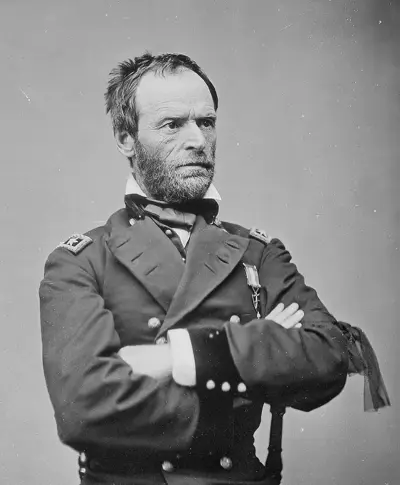
- Born: February 8, 1820
- Died: February 14, 1891
- Nationality: American
- Profession: Soldier
William Tecumseh Sherman was an American soldier, businessman, educator, and author. He served as a general in the Union Army during the American Civil War (1861–1865), receiving recognition for his command of military strategy as well as criticism for the harshness of the scorched earth policies he implemented in conducting total war against the Confederate States. British military theorist and historian B. H. Liddell Hart declared that Sherman was "the first modern general".
