New York State Quotes
The State hereby grants the exclusive privilege of navigating all boats that might be propelled by steam, on all waters within the territory, or jurisdiction of the State, for the term of twenty years.
While many use the invention and development of the Steamboat as an example of breakthrough technology by private enterprise, the reality was that Fulton and Livingston could not raise the private capital to develop the vessels and start operating them until the State government stepped in and granted them a monopoly for 20 years in the waters of the entire state of New York including the Hudson River and New York Harbor. This was one of the first examples of “corporate welfare” and subsidies for development of new technology. Fulton’s company used the courts to enjoin anyone else from operating a steamboat, and Fulton could charge very high rates as he had no competition thanks to New York State. Other boat operators then went to New Jersey which passed its own allowing anyone stopped by NY courts to sue Fulton & Livingston for triple damages. The lower Hudson River and New York Harbor was on the shores of BOTH states and each had an equal claim to jurisdiction. The Supreme Court settled the dispute in one of the major legal cases in American history. See {624485}
New York State, Law Granting a Monopoly to the Robert Fulton & Robert Livingston Company, 1798
Sourced by: Eigen's Political and Historical Quotations

While many use the invention and development of the Steamboat as an example of breakthrough technology by private enterprise, the reality was that Fulton and Livingston could not raise the private capital to develop the vessels and start operating them until the State government stepped in and granted them a monopoly for 20 years in the waters of the entire state of New York including the Hudson River and New York Harbor. This was one of the first examples of “corporate welfare” and subsidies for development of new technology. Fulton’s company used the courts to enjoin anyone else from operating a steamboat, and Fulton could charge very high rates as he had no competition thanks to New York State. Other boat operators then went to New Jersey which passed its own allowing anyone stopped by NY courts to sue Fulton & Livingston for triple damages. The lower Hudson River and New York Harbor was on the shores of BOTH states and each had an equal claim to jurisdiction. The Supreme Court settled the dispute in one of the major legal cases in American history. See {624486}

Fulton issued permits and seized boats that operated without their endorsement. A steamboat operator, Thomas Gibbons, had received a permit from the Federal Government to operate steamboat service between New York City and the New Jersey Shore. Fulton and New York would not let him traverse Hudson Bay and land in New York. This set the stage for the most important Supreme Court Case on Interstate Commerce--Gibbons v. Ogden (1824). See {621351}.

The steamboat was one of the first examples of American preeminence in technology. Like the airplane and the computer to come later, it’s importance was generally not recognized early.


He observes that many of the richest people and businesses are those who have lobbied for laws that either enrich them or hinder their competitors. Reduced regulations turn into "gold" on several ways: The company no longer has the administrative cost of complying with the regulations—thus increasing their profits. At the same time often the regulation prevents taking advantage of consumers or other businesses and when repealed, the company can go back to the pre-regulation era and obtain more business or higher prices, both of which increase profits—gold.


This criticism of business has been made ever since by many opposed to protectionism, corporate welfare, subsidies, and bailouts. Yet they get bigger each decade.

Most Americans agreed with this policy upon which Cleveland had run, but it was not favored by the companies that had been benefitting from monopolies, protective tariffs, corporate subsidies and corporate welfare, and government largess. Ironically, at the time, large American business was generally opposed to free trade and were supported by the Republican Party. The Democrats wanted free trade—just the opposite of the beginning of the 21st century.

When Secretary of State, Jefferson ran the first American Patent Office. The Patent system was originally and educational program, not an intellectual property program. Inventors would keep all their technological secrets to themselves. The idea behind the original patent system was to give an inventor a limited monopoly on profiting from his invention in exchange for sharing his information and techniques with his countrymen—thus improving the technological competency of the entire society. The very first patents were available for public inspection for that reason. And even today, copies of patents are available easily for almost no cost. And few American ideas worked as well as our early patent system. Through its educational role and technology transfer, America came from technological nowhere to being the pre-eminent inventing nation of the world. The balance between public access to invention and innovation and preservation of some rights to the creator of intellectual property is key to modern development.

The notion of government subsidies to private companies that performed valuable pubic services—public-private partnerships was used extensively by Clinton and was one of reasons that New York developed faster than the other Colonies. At the formation of America, Virginia and Pennsylvania were much bigger and wealthier states than New York. In large part, Clinton led the rapid growth and development.

Much if the American industrial revolution was assisted by government subsidies of one kind or another. Railroads, telegraph, armaments, foundries are just a few.

The Kimberly and Comstock lodes were natural deposits of copper and silver so close to the surface that it required very little work to remove the metal and sell the it.
Three years after he wrote this essay, the U. S. Economy suffered the Meltdown of 2008 and the Great Recession where the major American banks had much too small capital bases to survive so the Federal Reserve and the taxpayer bailed the banks out. Much of the problem was if a consumer or a business borrows money from a bank, he/she must have a capital base at least equal to the amount borrowed. But under the modern American banking system, if a bank wants to borrow from the people, the bank doesn’t even have to have a capital base of as much as ten percent of what it borrows and often has considerably less.


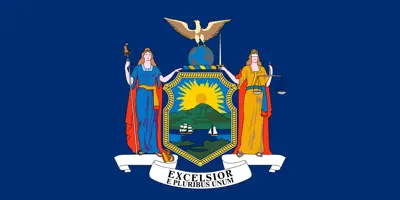
New York is a state in the Mid-Atlantic and Northeastern regions of the United States. It was one of the original thirteen colonies forming the United States. With a total area of 54,556 square miles (141,300 km2), New York is the 27th largest state; its population of more than 19 million people as of 2020 makes it the fourth most populous state in the U.S. The state is bordered by New Jersey and Pennsylvania to the south and Connecticut, Massachusetts, and Vermont to the east; it has a maritime border with Rhode Island, east of Long Island, as well as an international border with the Canadian provinces of Quebec to the north and Ontario to the northwest. It is sometimes referred to as New York State to distinguish it from New York City, which is its largest city.
