New York State Quotes
… navigating all boats that might be propelled by steam, on all waters within the territory, or jurisdiction of the State, for the term of twenty years.
Fulton issued permits and seized boats that operated without their endorsement. A steamboat operator, Thomas Gibbons, had received a permit from the Federal Government to operate steamboat service between New York City and the New Jersey Shore. Fulton and New York would not let him traverse Hudson Bay and land in New York. This set the stage for the most important Supreme Court Case on Interstate Commerce--Gibbons v. Ogden (1824). See {621351}.
New York State, Law granting steamboat inventor Robert Fulton and his associates the exclusive monopoly on any steamboat that might navigate in all the rivers of New York State and in the Hudson Bay of New York City, 1822.
Sourced by: Eigen's Political and Historical Quotations


While many use the invention and development of the Steamboat as an example of breakthrough technology by private enterprise, the reality was that Fulton and Livingston could not raise the private capital to develop the vessels and start operating them until the State government stepped in and granted them a monopoly for 20 years in the waters of the entire state of New York including the Hudson River and New York Harbor. This was one of the first examples of “corporate welfare” and subsidies for development of new technology. Fulton’s company used the courts to enjoin anyone else from operating a steamboat, and Fulton could charge very high rates as he had no competition thanks to New York State. Other boat operators then went to New Jersey which passed its own allowing anyone stopped by NY courts to sue Fulton & Livingston for triple damages. The lower Hudson River and New York Harbor was on the shores of BOTH states and each had an equal claim to jurisdiction. The Supreme Court settled the dispute in one of the major legal cases in American history. See {624485}


The steamboat was one of the first examples of American preeminence in technology. Like the airplane and the computer to come later, it’s importance was generally not recognized early.
While many use the invention and development of the Steamboat as an example of breakthrough technology by private enterprise, the reality was that Fulton and Livingston could not raise the private capital to develop the vessels and start operating them until the State government stepped in and granted them a monopoly for 20 years in the waters of the entire state of New York including the Hudson River and New York Harbor. This was one of the first examples of “corporate welfare” and subsidies for development of new technology. Fulton’s company used the courts to enjoin anyone else from operating a steamboat, and Fulton could charge very high rates as he had no competition thanks to New York State. Other boat operators then went to New Jersey which passed its own allowing anyone stopped by NY courts to sue Fulton & Livingston for triple damages. The lower Hudson River and New York Harbor was on the shores of BOTH states and each had an equal claim to jurisdiction. The Supreme Court settled the dispute in one of the major legal cases in American history. See {624486}

The only previous source of light in America had been whale oil or candles—both very expensive. Oil was discovered in Pennsylvania and refinery techniques developed to produce Kerosene. (Gasoline was too explosive and dangerous for home use.) Everyone’s standard of living depended on Kerosene at the time and John D. Rockefeller controlled the price everywhere except New York. There were no monopoly or antitrust laws when he gobbled up his competitors and he rapidly became the richest man in America and one of the most hated. His abuse of the system at the time led to the government regulation of monopolies and the antitrust laws. It was very courageous for the Atlantic Monthly to publish this article, as Rockefeller’s power extended all over the nation—but less in New York where the magazine was published.


Roosevelt was on a crusade to eliminate the vicious monopolies and trusts of the time. The number of terms he used to describe them was large but this has become the most memorable and most frequently quoted. See {585244} for some of the other terms he used. While this phrase was original with FDR, his relative, Theodore Roosevelt, used the term “malefactors” in a similar meaning in {585244}.
See {585243} for his most eloquent term.

the prophet was hostile to all forms of monopoly which in his time for almost always granted through political corruption and favoritism. Before Christians even considered the issue, Islam considered monopolies anti-consumer and contrary to the interests of the Muslim society.


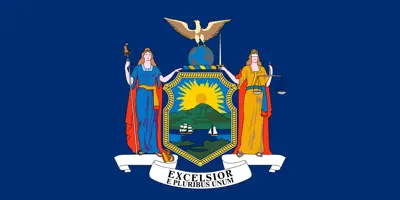
New York is a state in the Mid-Atlantic and Northeastern regions of the United States. It was one of the original thirteen colonies forming the United States. With a total area of 54,556 square miles (141,300 km2), New York is the 27th largest state; its population of more than 19 million people as of 2020 makes it the fourth most populous state in the U.S. The state is bordered by New Jersey and Pennsylvania to the south and Connecticut, Massachusetts, and Vermont to the east; it has a maritime border with Rhode Island, east of Long Island, as well as an international border with the Canadian provinces of Quebec to the north and Ontario to the northwest. It is sometimes referred to as New York State to distinguish it from New York City, which is its largest city.
