Ray Stannard Baker Quotes
You can ride from England to China on regular lines of steamships and railroads without once passing from the protecting hollow of Mr. Morgan’s hand.
Ray Stannard Baker, 1870-1946, Journalist, Colliers Weekly, 1901
Sourced by: Eigen's Political and Historical Quotations


Samuel Langhorne Clemens, 1835-1910. Railroads were vicious monopolies at the time. One technique they used was to build the railroad to the next town. The town would not only prosper by being able to ship its goods and produce back to other towns and cities. Once the town prospered a little, the railroad would extend the line to another town. Then they would raise the rates dramatically for the previous town. If they complained or some farmers or merchants would no longer use the railroad, the railroad would threaten to bypass the town and never stop to pick up and deliver goods. There was no government regulation that said that all towns had to pay the same rate or even a rate that was rationally related to the distance. Often the rate hikes were continued until the town was ruined. The only safety was for the towns or cities at the end where the railroad had to stop there to get cargo from ships or transfer to them. There was no legal requirement for railroads to be fair or reasonable.

What Mises says in this quotation is true. What he does not say that by the time the automobile was developed and then the airplane, the Railroad monopoly had impeded and destroyed so many different entities that the governments had cracked down and curtailed much of the ability of the Railroads to exercise monopolist power. If the Railroads had as much power in 1920 as they did in 1870, there probably never would have been a thriving auto industry and the airlines would likely never have succeeded. Mises again exaggerates a basic point that large monopolistic companies and industries often have not been able to stave off new technology and approaches. While true in many cases, the cause is not necessarily fundamental to economics but has sometimes (as with the railroads) been caused by Government regulation and reform. A better example is that the large sail dominated shipping industry was not able to stop the coal fired steam engine ships. Indeed the shipping owners embraced the new technology. The best examples of Mises point occurred after Mises died. For example, Microsoft was not able to prevent Google from dominating many of Microsoft’s positions in the IT world.

The Elkins Act was a cornerstone of Roosevelt’s “Square Deal” program. It authorized the Interstate Commerce Commission (ICC) to impose heavy fines on railroads that offered rebates, and upon the shippers that accepted these rebates. The large corporations and monopolies would get rebates from the railroads and thus pay far less than their smaller competitors to ship their goods. It drove thousands of small companies out of business. This was a basic part of American law until the deregulation of the latter part of the 20th century. So what had been illegal, unethical, and immoral for almost a century, became legal, ethical and moral, but again discriminated against small companies.


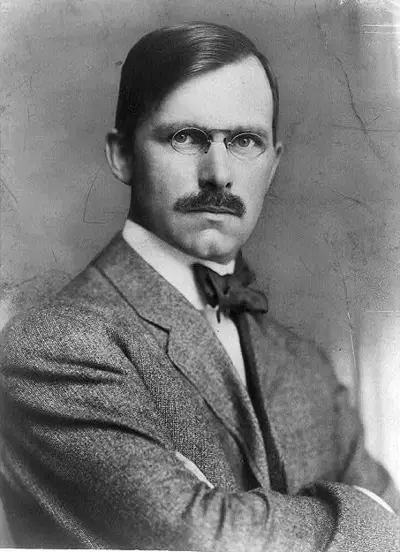
Ray Stannard Baker (also known by his pen name David Grayson) was an American journalist, historian, biographer, and author.
