Mark Twain Quotes
A railroad is a ravenous destroyer of towns, unless those towns are put at the end of it and a sea beyond, so that you can't go further and find another terminus. And it is shaky trusting them, even then
Samuel Langhorne Clemens, 1835-1910. Railroads were vicious monopolies at the time. One technique they used was to build the railroad to the next town. The town would not only prosper by being able to ship its goods and produce back to other towns and cities. Once the town prospered a little, the railroad would extend the line to another town. Then they would raise the rates dramatically for the previous town. If they complained or some farmers or merchants would no longer use the railroad, the railroad would threaten to bypass the town and never stop to pick up and deliver goods. There was no government regulation that said that all towns had to pay the same rate or even a rate that was rationally related to the distance. Often the rate hikes were continued until the town was ruined. The only safety was for the towns or cities at the end where the railroad had to stop there to get cargo from ships or transfer to them. There was no legal requirement for railroads to be fair or reasonable.
Mark Twain, Writer, Founder, Anti-Imperialist League, Letter to the San Francisco Alta California, May 26, 1867
Sourced by: Eigen's Political and Historical Quotations

The “rebate agony” referred to a corrupt practice of the Railroads and the Large Monopolies. The railroads charged a very high rate for the transportation of important products like beef and oil. However, secretly they gave back a large percentage of the transportation rate charged to the trusts. They in turn could cut their prices and undersell all the smaller competitors who were paying “full freight” and could not afford to match the lower price. As soon as the smaller competitors were driven out of business in an area, the trust raised its rates even higher than they charged originally. The Railroad had made a small but reasonable profit on the freight of the trusts but they were guaranteed all their business. They also made huge profits on the higher rates that the small companies paid until those companies were driven out of business. Journalists like Ray Baker and Ida Tarbell had uncovered the rebate scheme which enabled the trusts to steal high amounts from the general public through unreasonably high prices. President Theodore Roosevelt was committed to try and regulate the railroads and not allow rebates but charge the same public rate to all with no rebates. Socialists like Sinclair, thought that this attempt would be hopeless—that the damage had already been done, and the trusts now had so much money that they could buy state legislatures and many in Congress to preserve their dominance.


The Elkins Act was a cornerstone of Roosevelt’s “Square Deal” program. It authorized the Interstate Commerce Commission (ICC) to impose heavy fines on railroads that offered rebates, and upon the shippers that accepted these rebates. The large corporations and monopolies would get rebates from the railroads and thus pay far less than their smaller competitors to ship their goods. It drove thousands of small companies out of business. This was a basic part of American law until the deregulation of the latter part of the 20th century. So what had been illegal, unethical, and immoral for almost a century, became legal, ethical and moral, but again discriminated against small companies.

What Mises says in this quotation is true. What he does not say that by the time the automobile was developed and then the airplane, the Railroad monopoly had impeded and destroyed so many different entities that the governments had cracked down and curtailed much of the ability of the Railroads to exercise monopolist power. If the Railroads had as much power in 1920 as they did in 1870, there probably never would have been a thriving auto industry and the airlines would likely never have succeeded. Mises again exaggerates a basic point that large monopolistic companies and industries often have not been able to stave off new technology and approaches. While true in many cases, the cause is not necessarily fundamental to economics but has sometimes (as with the railroads) been caused by Government regulation and reform. A better example is that the large sail dominated shipping industry was not able to stop the coal fired steam engine ships. Indeed the shipping owners embraced the new technology. The best examples of Mises point occurred after Mises died. For example, Microsoft was not able to prevent Google from dominating many of Microsoft’s positions in the IT world.

The railroad monopolies had been abusing their workers for years and this strike brought most of the railroads to a standstill. Since the public and much economic activity depended on the railroad, the Railroad managers tried to get the government to use the U. S. Army to break the strike rather than negotiate in good faith with the railroad labor unions.

Vanderbilt with his railroad monopoly was able to dictate prices to all the oil refineries for the transportation of kerosene of which over 400 million gallons was shipped annually to provide light to the USA and some other countries as well. However by charging some higher prices than others he could ruin some after investing in others. Under pressure, he made this famous agreement. The agreement became famous for although he charged all refineries the same, he gave rebates (kickbacks) secretly to Standard Oil ensuring that they would have an oil monopoly. Then Standard oil demanded to be paid their “rebate” on all oil the railroads shopped for Standard competitors. Their demands grew. When Standard could net get a big enough kickback to drive all the other refineries out of business, they built their own pipelines to bypass the railroads entirely. As there was virtually no regulation of monopolies or common carriers, most of this was legal, but was so egregious that it led to the passage of the Anti-Tust laws.

Ten years later, The Transcontinental Railroad was completed. What Sherman did not count on was the massive subsidies that the government offered the companies to build the railroad fast.


Those greedy airplane, bus, and train operators who do not follow all the safety rules and make the investments in safety undercut the prices of the responsible operators that do. Therefore she placed great emphasis on getting the bad ones out of business. However Congress would only grant limited powers and limited budget for inspection and regulation to the Federal agencies responsible.
The President had decided to aggressively push for railroad regulation to end the rate rebate abuses that were used to support the monopolies like Standard Oil. In vintage Roosevelt tactics, he gave his first major speech on the subject in the setting and forum that would be most opposed to it. The Union League Club of Philadelphia in included the wealthiest men in the area where were most opposed to any Federal Regulation of anything. All the major railroad executives and stock owners and traders were also members. The President wanted to persuade the opponents to change their positions, and sometimes he did. He also was driven by his concept of sports and athletics so that the “opposition” should have “fair notice” for the contest ahead.
the administration’s plan to regulate the industry Taft was actually the Secretary of War when he gave this speech. However, President Theodore Roosevelt used him as his “Assistant President” to run things in his absence and help with policy making and implementing major reforms. The President had decided to aggressively push for railroad regulation to end the rate rebate abuses that were used to support the monopolies like Standard oil. He had initiated the campaign by personally speaking to the Railroad Owners and Corporate Magnates—{640489}. Then he dispatched Taft to address the Railroad Executives of the Nation. This led to the first American regulation of the Railroads.
To Republicans of the 21st century, it is shocking the Taft (and Theodore Roosevelt) were strong advocates of reducing the economic gulf between the rich and poor.


Stickney was a maverick among Railroad executives of the time. He favored some regulation by the Federal Government and was opposed to the most flagrant abuses of the railroads.

In America that had almost happened as the farmers were at the mercy of the railroad monopoly in any one area.
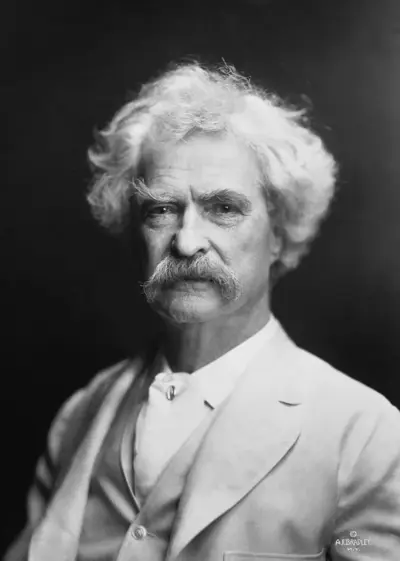
Samuel Langhorne Clemens, known by his pen name Mark Twain, was an American writer, humorist, entrepreneur, publisher, and lecturer. He was lauded as the "greatest humorist the United States has produced," and William Faulkner called him "the father of American literature". His novels include The Adventures of Tom Sawyer (1876) and its sequel, the Adventures of Huckleberry Finn (1884), the latter often called "The Great American Novel".
