Ludwig von Mises Quotes
The bigness and the economic “power” of the railroad companies did not impede the emergence of the motor car and the airplane.
What Mises says in this quotation is true. What he does not say that by the time the automobile was developed and then the airplane, the Railroad monopoly had impeded and destroyed so many different entities that the governments had cracked down and curtailed much of the ability of the Railroads to exercise monopolist power. If the Railroads had as much power in 1920 as they did in 1870, there probably never would have been a thriving auto industry and the airlines would likely never have succeeded. Mises again exaggerates a basic point that large monopolistic companies and industries often have not been able to stave off new technology and approaches. While true in many cases, the cause is not necessarily fundamental to economics but has sometimes (as with the railroads) been caused by Government regulation and reform. A better example is that the large sail dominated shipping industry was not able to stop the coal fired steam engine ships. Indeed the shipping owners embraced the new technology. The best examples of Mises point occurred after Mises died. For example, Microsoft was not able to prevent Google from dominating many of Microsoft’s positions in the IT world.
Ludwig von Mises, 1881-1973, Austrian Economist & Political Philosopher, Human Action, 1949
Sourced by: Eigen's Political and Historical Quotations

His father, Henry Ford, did not agree that the Airplane would be so important, but the son’s vision made Ford the largest airplane manufacturer in America.


The Elkins Act was a cornerstone of Roosevelt’s “Square Deal” program. It authorized the Interstate Commerce Commission (ICC) to impose heavy fines on railroads that offered rebates, and upon the shippers that accepted these rebates. The large corporations and monopolies would get rebates from the railroads and thus pay far less than their smaller competitors to ship their goods. It drove thousands of small companies out of business. This was a basic part of American law until the deregulation of the latter part of the 20th century. So what had been illegal, unethical, and immoral for almost a century, became legal, ethical and moral, but again discriminated against small companies.


She was then the European Commissioner for Competition

The “rebate agony” referred to a corrupt practice of the Railroads and the Large Monopolies. The railroads charged a very high rate for the transportation of important products like beef and oil. However, secretly they gave back a large percentage of the transportation rate charged to the trusts. They in turn could cut their prices and undersell all the smaller competitors who were paying “full freight” and could not afford to match the lower price. As soon as the smaller competitors were driven out of business in an area, the trust raised its rates even higher than they charged originally. The Railroad had made a small but reasonable profit on the freight of the trusts but they were guaranteed all their business. They also made huge profits on the higher rates that the small companies paid until those companies were driven out of business. Journalists like Ray Baker and Ida Tarbell had uncovered the rebate scheme which enabled the trusts to steal high amounts from the general public through unreasonably high prices. President Theodore Roosevelt was committed to try and regulate the railroads and not allow rebates but charge the same public rate to all with no rebates. Socialists like Sinclair, thought that this attempt would be hopeless—that the damage had already been done, and the trusts now had so much money that they could buy state legislatures and many in Congress to preserve their dominance.


He was one of the first to realize that technology was shaping the relations of people and states throughout the world. In 1891 most other people did not appreciate this dynamic including most politicians. However, we might wonder today what period of time he was contemplating when he used the word “rapidly”. Some have concluded that the globalization resulting from technology has been astoundingly fast while others see it as far too slow and it has a long way to go. See the related quotes for others who were early observers of the coming changes. See the Relates Quotes for more of the early observations of this phenomenon.


The President had decided to aggressively push for railroad regulation to end the rate rebate abuses that were used to support the monopolies like Standard Oil. In vintage Roosevelt tactics, he gave his first major speech on the subject in the setting and forum that would be most opposed to it. The Union League Club of Philadelphia in included the wealthiest men in the area where were most opposed to any Federal Regulation of anything. All the major railroad executives and stock owners and traders were also members. The President wanted to persuade the opponents to change their positions, and sometimes he did. He also was driven by his concept of sports and athletics so that the “opposition” should have “fair notice” for the contest ahead.
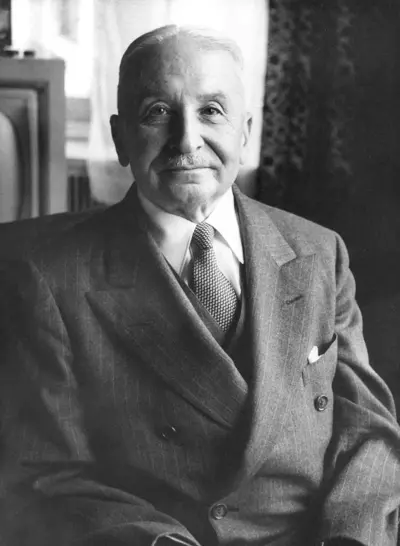
Ludwig Heinrich Edler von Mises was an Austrian School economist, historian, logician and sociologist. Mises wrote and lectured extensively on the societal contributions of classical liberalism. He is best known for his work on praxeology, a study of human choice and action.
