Henry Ford Quotes
I will build a motorcar for the great multitude. It will be so low in price that no man making a good salary will be unable to own one.
Henry Ford, 1863-1947, Industrialist & Philanthropist, Unsuccessful Republican Michigan U. S. Senatorial Candidate [1918], Recollection of his statement before designing his Model T, My Life and Work
Sourced by: Eigen's Political and Historical Quotations


What Mises says in this quotation is true. What he does not say that by the time the automobile was developed and then the airplane, the Railroad monopoly had impeded and destroyed so many different entities that the governments had cracked down and curtailed much of the ability of the Railroads to exercise monopolist power. If the Railroads had as much power in 1920 as they did in 1870, there probably never would have been a thriving auto industry and the airlines would likely never have succeeded. Mises again exaggerates a basic point that large monopolistic companies and industries often have not been able to stave off new technology and approaches. While true in many cases, the cause is not necessarily fundamental to economics but has sometimes (as with the railroads) been caused by Government regulation and reform. A better example is that the large sail dominated shipping industry was not able to stop the coal fired steam engine ships. Indeed the shipping owners embraced the new technology. The best examples of Mises point occurred after Mises died. For example, Microsoft was not able to prevent Google from dominating many of Microsoft’s positions in the IT world.


In the Meltdown of 2008, the American Auto Companies were in dire straights and faced bankruptcy with no certainty that the industry could stay alive., They were running out of money and President Obama decided to make loans, take stock and control and force modernizing on the industry. As a result, and with some Toyota mismanagement, the companies returned to profitability and paid back their government loans early and as a result the bailout had not cost the taxpayers any money. Creditors however were outraged that the lost their preferred advantage had their been a bankruptcy.

Ford’s associate Henry Sorenson also was deeply involved with developing the concept of an assembly line. History has tended to give the credit to Ford as he was the boss. However, it is doubtful that either man thought of the concept independently by mutually and collegially developed and implemented the idea.


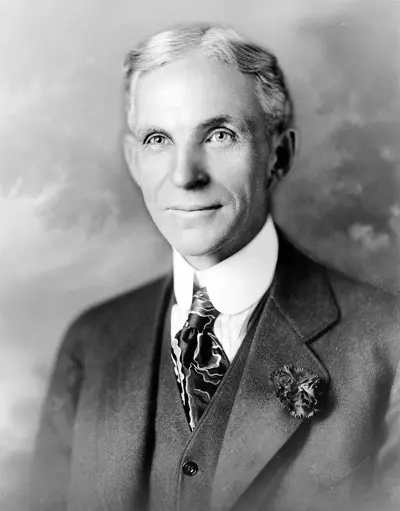
Henry Ford was an American industrialist, business magnate, anti-Semite, and founder of the Ford Motor Company and chief developer of the assembly line technique of mass production. By creating the first automobile that middle-class Americans could afford, he converted the automobile from an expensive curiosity into an accessible conveyance that profoundly impacted the landscape of the 20th century.
