Samuel Ringgold Ward Quotes
The slaveholders are publishing, as in so many legibly written volumes, in the faces of their mulatto offspring, the sad, sickening evidences of their abominable immoralities…What a religion must that be, which declares that the system, of which these deeds are part, is ordained, sanctioned, owned and blest, of God!
Observation of the other fugitives in Canada
Samuel Ringgold Ward, 1817-?, Fugitive Slave & New York Minister, Quoted in Davis, Neglected Stories
Sourced by: Eigen's Political and Historical Quotations


As a British Loyalist officer, he and his men were dispatched to Savannah, Georgia. There he saw the Southern version of slavery for the first time and was shocked at the cruelty. At the end of the Revolutionary war, he and many other loyalists fled to Canada and began his political career, then representing Britain in the Caribbean. See also {591379}.

In 1851 the Anti-Slavery Society of Canada was founded stimulating a major public debate in Canada. Although there was no slavery in Canada, there were sharp differences as to how overt Canadians should become in opposition to American slavery. Southern politicians pressured Canada not to interfere and objected to Canadians giving asylum to fugitive slaves. The hypocrisy of American principles of freedom and liberty with the institution of slavery was a favorite target of Brown’s speeches and writing.


Brown was the richest man in Rhode Island and made much of his money in the slave trade. This quotation shows that slavery was not completely a North verses South split. Northerners like Brown for whose family Brown University was named, was as virulent supporter of slavery as the most ardent Southerner.

Jefferson was one of the early observers that the the institution of slavery corrupted and depraved the whites.

This moral statement from a New jersey Quaker abolitionist is not particularly noteworthy, However what makes this quote important is that Woolman traveled throughout the South preaching this as his main theme. At that time — before the American Revolution — he did so and was not attacked or intimidated; he was mostly ignored by the Southern authorities. At the time, the South was very confident of its ability to continue slavery. Years later, when the abolition movement grew larger and stronger, a Northern Quaker Preacher doing this not not escape with his life.
[This was the first Abolition appeal written by a Black Man. It was published in Boston and despite the fact that it was very critical of whites, was very popular going through two more printings within the next two years.]

He was the son of LeRoy Percy a Governor of Mississippi, who was running for that post against James Kimble Vardaman, an unabashed Racist, populist, and hate-monger. (See the related quotes for examples.) He appealed to the worst of the Mississippi. This was his famous description of the crowd that turned out for a Vardaman rally in 1903,


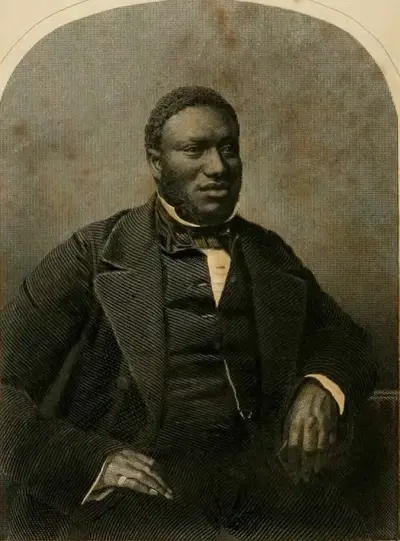
Samuel Ringgold Ward was an African American who escaped enslavement to become an abolitionist, newspaper editor, labor leader, and Congregational minister.
