Othello Quotes
Might not the inhabitants of Africa, with still greater justice on their side, than we have on ours, cross the Atlantic, seize our citizens, carry them into Africa, and make slaves of them, provided they were able to do it? But should this be really the case, every corner of the globe would reverberate with the sound of African oppression; so loud would be our complaint, and so “feeling our appeal” to the inhabitants of the world at large. We should represent them as a lawless, piratical set of unprincipled robbers, plunderers and villains, who basely prostituted the superior power and information, which God had given them for worthy purposes to the vilest of all ends. We should not hesitate to say that they made use of those advantages only to infringe upon every dictate of justice; to trample under foot every suggestion of principle, and to spurn, with contempt, every right of humanity.
Othello, ?, Pseudonym for a Free Negro, Essay on Negro Slavery, Published in Maryland, May 23, 1788
Sourced by: Eigen's Political and Historical Quotations

What is interesting is that when he cites the dreadful facts about American slavery, he never points out that the American slave traders rarely raided the villages and captured the slaves themselves. Most often this was done my Khamenei’s Muslim brethren slave traders who dominated the slave trade in Africa. Nor does he point out what after realizing the evil that Americans perpetrated with slavery, we ended it in the 1860s. Saudi Arabia, the central nation of Islam, did not make slavery illegal until 100 years later, and even today, there are many Saudi’s who get caught practicing slavery with household servants and forms of indentured servitude. And while Christians and the Bible tolerated slavery, the Koran and the Prophet never once condemn the practice of slavery. Democracy at any point in time is not always morally right, but it is a process by which under pressure from the people it improves over time because the people can change it and do.
_0_thumbnail_47x47.jpg "A portrait of Richard Allen, a Methodist bishop and founder of the African Methodist Episcopal Church")
Many whites thought that the solution to the problem of free and emancipated Negroes was to send them to Africa. They assumed that the negroes would by desirous of that solution also, but they rarely asked them. When they did, they received answers much like this one from one of the leading Black clergymen in America.


This was part of his presentation to Northern influential business men showing them what he claimed was the New South. He was particularly complimentary about the negro Christian viewpoint that inhibited revenge or retaliation for their terrible treatment. The favorable lines about Negroes were well received by Northerners. However, they were mostly unaware of his racist views he expressed when in the South. See Quotation 643649.


Brown was the richest man in Rhode Island and made much of his money in the slave trade. This quotation shows that slavery was not completely a North verses South split. Northerners like Brown for whose family Brown University was named, was as virulent supporter of slavery as the most ardent Southerner.

Abraham Lincoln in his famous eulogy to Clay in Springfield, IL, used this quotation.


Parker and other escaped slaves in Christiana fought off slave catchers and killed the slave owner leading them. Charged with treason, he escaped to Canada with his family and lived there the rest of his life. While not a polished writer, after he himself had escaped and went to Christiana and leaned to read and write. He wrote this narrative of his life as a slave—one of the few written works we have from slaves.
Duchess of Bedford. In 1853, during a visit to England, Harriet Beecher Stowe was presented with a petition containing the signatures of over a half million British women asking for an end to American Slavery. It was in 26 bound volumes. The backing of the prestigious Duchess and so many other English women had a profound effect on American Women and the growing strength of the Abolition movement.


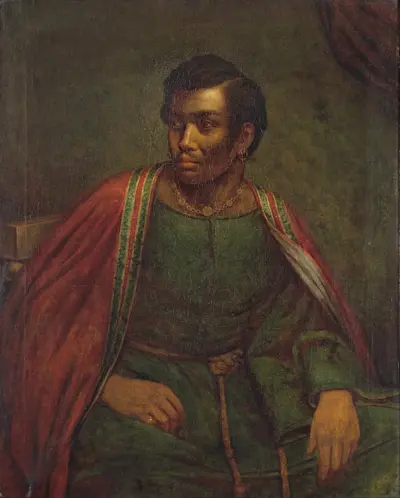
Othello (The Tragedy of Othello, the Moor of Venice) is a tragedy by William Shakespeare, probably written in 1603.
