George S. Brown Quotes
Because the shouts for European freedom at New York, and the poeans of the Fourth of July are drowned in the clanking of the chains in Washington and New Orleans, is the rising spirit or our free Canada to be drilled and broken down to suit the mock liberty of the model Republic. If they have no sympathy for their own oppressed children, they should feel indebted to those whose hearts are large enough to take in the oppressed of every land and of every color.
In 1851 the Anti-Slavery Society of Canada was founded stimulating a major public debate in Canada. Although there was no slavery in Canada, there were sharp differences as to how overt Canadians should become in opposition to American slavery. Southern politicians pressured Canada not to interfere and objected to Canadians giving asylum to fugitive slaves. The hypocrisy of American principles of freedom and liberty with the institution of slavery was a favorite target of Brown’s speeches and writing.
George Brown, 1818-1880, Canadian Reformer, Politician and Publisher, Premier [Governor] of Onterio, Founder of the Toronto Globe, Editorial, Toronto Globe, March 6, 1851
Sourced by: Eigen's Political and Historical Quotations

Although Wedgwood was a business man and ceramic manufacturer, he was a staunch abolitionist. He made these medallions by the thousands and gave them to all who would receive them. The text became the motto of the anti-slavery society. It was one of the first examples of a logo – a symbol for a political cause being very effective.


The issue of slavery which had been suppressed in Congress for the first decades of the nation broke out when Missouri statehood was considered. By previous agreement, slavery was not even discussed in Congress but the time period elapsed. Tallmadge not only proposed that no more slaves could come into Missouri {613176} but most shocking to the Southerners was that every person born in the new state would be free at the age of 25. In a generation, there would be no more slavery in Missouri and there would be no economic compensation for slave owners at all. The House of Representatives accepted the amendment, but it failed in the Senate. At that time, Senators were not elected by voters but were appointed by the state legislators and the Southern slave states had a disproportionate share of the senate from a population point of view. But what this quotation shows clearly that a majority of the country in 1819 were opposed to slavery and were willing to end it without compensation.


Brown was the richest man in Rhode Island and made much of his money in the slave trade. This quotation shows that slavery was not completely a North verses South split. Northerners like Brown for whose family Brown University was named, was as virulent supporter of slavery as the most ardent Southerner.


Baron Brougham and Vaux

Louis Napoleon Bonaparte. The “colonies” to which we was referring were the French Colonies in the Caribbean—particularly Haiti. The Black slaves had revolted against the slave-owners and had taken over all positions of authority and wore the uniforms and symbols of power including the epaulettes—the gold braid shoulder pieces that were symbols of high rank in military and diplomatic uniforms which were worn on all official occasions. Napoleon never did make good on his vow. He had many more problems with his own wars and governance in Europe. This quote does demonstrate the racism that existed in supposedly tolerant France.
There were no women’s shelters in the 19th century, and the police or sheriffs would not entertain a complaint from a wife for assault, sexual or otherwise. She compared the state of women to that of fugitive slaves a few decades earlier. Then there was the Underground Railroad and other institutions which would shelter and help the slaves. There was no such mechanism for women abused in their marriage.


Observation of the other fugitives in Canada


Duchess of Bedford. In 1853, during a visit to England, Harriet Beecher Stowe was presented with a petition containing the signatures of over a half million British women asking for an end to American Slavery. It was in 26 bound volumes. The backing of the prestigious Duchess and so many other English women had a profound effect on American Women and the growing strength of the Abolition movement.

Even before we had a Constitution there was major opposition to slavery. The “price” of the American Union was the acceptance of the slavery of the South. But the hypocrisy of a country based on liberty to allow and enforce slavery was not lost on the founding fathers. Ironically the abolitionists among the founding fathers were certain that they could persuade the Southern slaveholders of the error of slavery in a few years and things would be set right in the land. Even George Washington {630626}, and Thomas Jefferson and some other slaveowners at the time wished to see its abolition. Slaveholding Southern Founding Fathers in general were so wary of the abolitionists that they achieved structural, disproportionate, power in the new Constitution to ward off the abolitionists attempts to reform slavery.


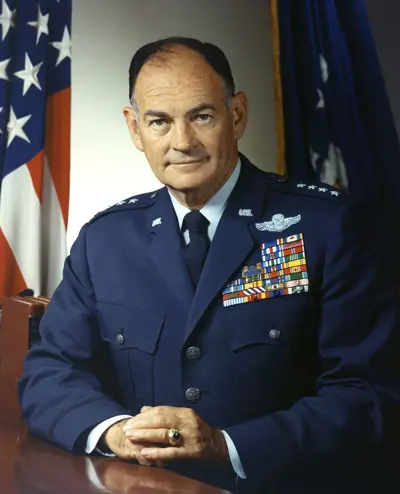
George Scratchley Brown was a United States Air Force general who served as the chairman of the Joint Chiefs of Staff. In this capacity, he served as the senior military adviser to the president of the United States, the National Security Council and the secretary of defense. Through the commanders of the unified and specified commands, he was also responsible for executing the decisions of the National Command Authorities regarding worldwide readiness and employment of combat forces of the United States Army, Navy, Air Force and Marine Corps.
