Philip Hone Quotes
A Negro boy, named George Kirk, a slave from Georgia, secreted himself in a vessel commanded by Captain Cuckley, and was brought to New York. Here he was arrested and confined, at the instance of the captain, who is subjected to severe penalties for the abduction of the slave. The claim of the master to have the fugitive sent back to Georgia was tried…. The judge’s decision set the boy free, for want of evidence to prove his identity; and such a mob, of all colours, from dirty white to shining black, came rushing down Nassau and into Beckman Street as made peaceable people shrink into places of security. Such shouting and jostling, such peals of negro triumph, such uncovering of woolly heads in raising the greasy hats to give effect to the loud huzzas of the sons of Africa…. How will it end? How long will the North and the South remain a united people?
Philip Hone, 1780-1851, Mayor of New York City (Democrat), Diary, October 27, 1846
Sourced by: Eigen's Political and Historical Quotations

In 1851 the Anti-Slavery Society of Canada was founded stimulating a major public debate in Canada. Although there was no slavery in Canada, there were sharp differences as to how overt Canadians should become in opposition to American slavery. Southern politicians pressured Canada not to interfere and objected to Canadians giving asylum to fugitive slaves. The hypocrisy of American principles of freedom and liberty with the institution of slavery was a favorite target of Brown’s speeches and writing.

Northern laborers, especially the new Irish immigrants, were fearful of the prospect of competing for jobs with freed Negroes who they perceived would flock to the North. That is what happened but a century later. The blanket assumption that the South was pro slavery was also not accurate. Different sociologies and economics produced different attitudes in communities throughout the South and some were inclined to abolition as Rankin’s history demonstrates.

When the first Southern States seceded, each appointed a whose job it was to persuade the other Southern States to also secede. In this case Hale was marketing secession to Kentucky which with Maryland were the only two Southern States to reject what they regarded as treason and rebellion. The importance of the quotation however is in his argument which was all based on enmity to racial equality and abolition. Later Southern apologists would argue that the Civil War was fought, not about slavery and racism butt about different philosophies of government. See {623715} .

Buchanan us considered by most historians to have been the worst or one of the worst Presidents of the United States. At this point, he was a lame duck president with Abraham Lincoln, the President Elect soon to take office. This speech, just encouraged the South more than ever and helped to bring about the Civil War. His vacillation and lack of any leadership on the slavery question exacerbated the polarization that was tearing the nation apart.

The reason for secession was the threat to slavery, which was a great threat to the slave-owners of the South. However, the non slave-owners had a very strong vested interest in maintaining slavery in that most Southerners had been brought up with such a negative view of Blacks that they were paranoid of Black equality or even worse some Blacks in positions of authority over whites. At the time, it was the Republican Party that was the advocate for minority equality and the Democratic Party embraced the racists. The parties would flip flop after the Civil Rights Act of 1964 ending legal segregation was passed by a Democratic President and a Democratic Majority Congress.


The amendments failed as did the compromise.

See Mark {606304}; also Matthew {606727}. Lincoln had used the “house divided” biblical metaphor in 1843 when arguing for Whig solidarity. The first political use of the Biblical metaphor and quotation with respect to American slavery appears to have been by Sam Houston in 1850 {603970}. The first use with respect to American slavery was byMassachusetts abolitionist, Edmund Quincy, in 1852. The second sentence of this famous quotation was forsaged earlier. See Lincoln, {619494} & {584918}. Also See Felix Rohatyn who used the Lincoln line to refer to poverty: {70611}.
The logic of Southern secession made so little sense to most Northerners, that they assumed that after the election, the Southern threats of treason and rebellion would stop. Most Northerners did not appreciate that Southerners had little economic vision absent slavery and could not imagine how they could survive. For the Northerners, they had seen great economic growth with free labor and no slavery. But most Southerners were ignorant of the possibilities except for the few very wealthy Southern families who had seen the North and England. They realized that the South could make it economically, but they whose total fortunes came from the ownership value of slaves, might not be in their exalted positions without slavery. At the time, the value of the Southern slaves was greater than the value of all the land, factories, mines, and farms of the South.


What makes this quotation so historically interesting is that the abiding by the Supreme Court’s decisions on constitutionality was even an issue. It was because of the terrible Dred Scott decision which required Northern States to return fugitive slaves to their owners despite the constitutions of those states which stated that all men were free. A substantial part of the Democratic Party was the “solid South” and the return of fugitive slaves was one of the major issues of the 1860 Presidential Election. Ironically, the Southern States were arguing AGAINST states’ rights when the Northern States’ laws and Constitutions made fugitive slaves free the minute they set foot in the state.


While England was strongly opposed to slavery, the English textile industry benefited from importing American Southern cotton. So many in England were supportive of the Confederacy.

The Confederates had a strategy of obtaining material assistance, prestige and recognition from England during the civil war. Confederate diplomats reported favorable attitudes of English diplomats. However, Southern leaders were in absolute denial about and insensitive to the revulsion that most of Europe and the sophisticated nations felt about slavery at the time." 1st Viscount Lyons

The first sentence is inscribed on the Jefferson Memorial in Washington DC. The last two sentences are rarely quoted.
This quotation is a classic example of the extreme view of slavery that was held by many Southerners. Note the phrase: “as the great God-given guaranty of the freedom of the white man through the thralldom of the black”. The Southern view was that the only way the white can be free is to have the Black as a slave…and this order of things is what God had ordained.


The writer was a free Black minister in Maryland. Maryland was a slave state, and the whites were very anti-Lincoln. The free Blacks were under constant scrutiny as there were rumors that the election of Lincoln would be the instigation of a free Black and slave revolt.
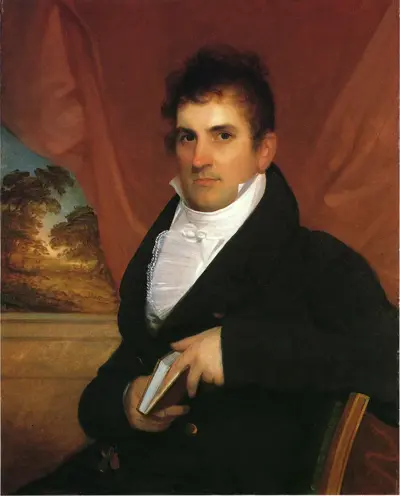
Philip Hone was Mayor of New York City from 1826 to 1827. He was most notable for a detailed diary he kept from 1828 until the time of his death in 1851, which is said to be the most extensive and detailed on the first half of 19th-century America.
