Harriet Tubman Quotes
I looked at my hands to see if I was the same person now I was free. There was such a glory through the trees and over the fields, and I felt like I was in heaven.
Harriet Tubman, c. 1820-1913, Slave and abolitionist, Description of her feeling when for the first time in her life she had crossed the border from the slave states to the free states in the North
Sourced by: Eigen's Political and Historical Quotations


What makes this quotation so historically interesting is that the abiding by the Supreme Court’s decisions on constitutionality was even an issue. It was because of the terrible Dred Scott decision which required Northern States to return fugitive slaves to their owners despite the constitutions of those states which stated that all men were free. A substantial part of the Democratic Party was the “solid South” and the return of fugitive slaves was one of the major issues of the 1860 Presidential Election. Ironically, the Southern States were arguing AGAINST states’ rights when the Northern States’ laws and Constitutions made fugitive slaves free the minute they set foot in the state.

This is an important quotation because it shows that slavery was the principle reason that the South succeeded and began their rebellion. In the early 20th century, there was a movement to make the Confederacy and the rebellion more noble by promoting the idea that the Civil War was fought by the South for more lofty reasons such as States Rights, Original Construction, different economic philosophies and the like. This was a more noble cause then the right to deny other human beings their rights, to own other human beings who they could beat, torture, sexually use and even murder them was a pretty selfish and demeaning reason to have started a rebellion that would then cost more Americans their lives than any other American conflict. The succession documents and others of the Southern States and the Confederacy make it clear that slavery was THE issue and fleeting references to any of the others were only made to complain about the potential effect on abolition and the refusal of the abolitionist states to cease aiding and protecting fugitive slaves.

I should sooner remain in Southern bondage than avail myself of the opportunity of Northern freedom.
Hughes was a strong critic of the exploitation of laborers in the North by what he called the “bloated capitalist” First Irish Bishop in the United States


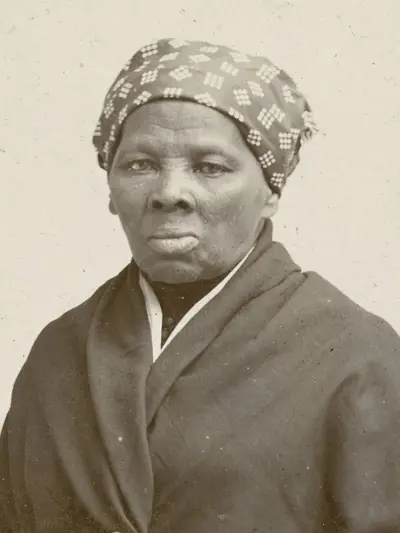
Harriet Tubman was an American abolitionist and political activist. Born into slavery, Tubman escaped and subsequently made some 13 missions to rescue approximately 70 enslaved people, including family and friends, using the network of antislavery activists and safe houses known as the Underground Railroad. During the American Civil War, she served as an armed scout and spy for the Union Army. In her later years, Tubman was an activist in the movement for women's suffrage.
