Serge Lang Quotes
The problems of financing the universities and their intellectual freedom, threatened by political and bureaucratic interference, are problems which are invariant under the ism transformations: socialism, communism, capitalism, or any other ism or ology.
Lang, Serge. The File: Case Study in Correction (1981). Springer-Verlag, 1981.


Hobson, like Mark Twain in America, was a major critic of imperialism.

The University of Wisconsin had a radical faculty member who claimed that the 9-11 attack was the fault of Vice President Cheney and other absurd claims that were supportive of the Muslim Terrorists. Many called for the firing of the faculty member who had academic tenure. The University decided that college students were not going to be fooled or seduced by such absurd statements and that while in this case the statement were controversial and absurd, what would happen when a faculty statement was just controversial. The University agreed with almost all of the other great universities in America with the fact that the risk of a foolish pedant like this is very tiny in contrast to the risk of allowing officials—-academic or political---to to determine what a professor can say. This freedom has made the American University system the envy of the entire world.

Congress was at the time considering the possibility of a National University. Dr. Eliot was one of the national leaders to kill the idea using oratory like this. Not the extreme sarcasm of the last sentence. At the time Congress was notorious for its conditioning appointments on almost any variable except merit.


While this quotation seems bizarre to us in modern America, there was some historical truth of this in Europe. Before political parties, the Church was the dominant political force, and no professor could be appointed whose views did not coincide with those of the church. Later political parties in many parts of Europe did concern themselves with the views of professors. However, America with its strong tradition of private universities built state public universities in the mold of Harvard, Yale, Brown, Columbia and Princeton where national and local politics were not major factors of appointment and retention of professors. Today it is very rare when a state legislature or government allows politics to become a factor in appointments of professors. The University of Virginia is the most dramatic exception where governors of the state serve for 2 years and when a new governor takes office, he replaces all the trustees and the University. These then have allowed politics to become a major factor in some dramatic cases. And the Federal Universities—the military service academies—do allow political views to encroach on the faculty appointment and retention decisions. However, this is rarely partisan in the sense of Democrat or Republican. But Professors who hold views contrary to BOTH political parties are rare.


Mr. Ellis is a professor emeritus of German literature at the University of California, Santa Cruz and author of “The Breakdown of Higher Education: How It Happened, the Damage It Does, and What Can Be Done.”
Mr. Ellis is a professor emeritus of German literature at the University of California, Santa Cruz and author of “The Breakdown of Higher Education: How It Happened, the Damage It Does, and What Can Be Done.”


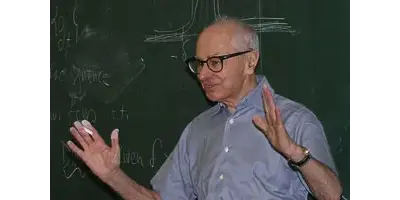
Serge Lang was a French-American mathematician and activist who taught at Yale University for most of his career. He is known for his work in number theory and for his mathematics textbooks, including the influential Algebra. He received the Frank Nelson Cole Prize in 1960 and was a member of the Bourbaki group.
