Jim Webb Quotes
The political system must listen to the military.
There is frequently a disagreement between the military and civilian leaders just as there are disagreements among most political personnel. Hawks, and people who have had experience in the military tend to think that military advice on military matters should be determinative with the President and Congress. Others tend to believe that military advice should be considered, but if it were always adhered to, there would be no point in having civilian control over the military. See {639667} for an example of when military leadership advice prevailed and it was a mistake.
James Webb, Secretary of the Navy (Republican), U. S. Senator (Democrat, VA), Interview, NPR The Dianne Rehm Show, May 19, 2014
Sourced by: Eigen's Political and Historical Quotations

The “Principals Committee” is the senior interagency forum for consideration of policy issues affecting national security. It includes the National Security Director (Chair), the CIA Director, the Secretary of Defense and his Deputy, the Secretary of State and his Deputy, the Chairman of the Jount Chief’s of Staff, The Special Representative to the United Nations and other staff as invited. Clarke was almost always invited to these meeting when terrorism was discussed but he did not have a vote. This is a very important quotation for several reasons. First, it shows the influence that the Defense Department and CIA leaders had with President Bush before the 9-11 attack. It also illustrates dramatically how reluctant our military and CIA were to use drones. It was President Obama who overruled them and changed America policy to use Drones to protect American interests. It also indicates how there was a split regarding the perception of the danger of Al Qaeda and bin Laden with Clark and some of the other Principals placing more value on a military strike than the military and covert action leaders. This is not uncommon despite the fact that public perception is that it is always the military leaders who are the hawks. Also, it illustrates the problem of allowing the military point of view to always prevail in national policy making involving use of force. See {639322}.


The only soldier ever so honored


The irony is that it is just for the lack of this fundamental principle that Napoleon eventually became the Government and the Military in France.

America is almost unique among nations where the military has never been a force that either dominated or controlled the government or acted independently from it. The Founding Fathers knew well the history of Europe and other nations, and built many checks into our Constitution and our traditions with George Washington, setting the example for American military men forever after.


Many of the fundamental principles of government that were in the United States Constitution, were already in the Constitutions of different states. Vermont had a substantial number of them. When we speak of the Constitution as a “revolutionary document” it was to the rest of the world but not to many Americans who had these concepts in their state constitutions and had been living with them for some time.


He lost the vote on this issue, and the Congress created the first committee to investigate and oversee military affairs.


Civilian control of the Military did not just pop in to the Constitution 11 years later. This and many other fundamental ideas had come from the State Constitutions and other documents.


3 years later he led America on a huge invasion and nation building project in Iraq. It turned out that had he listened to his own advice and not flip-flopped, the huge cost of the Iraq War might have been avoided.


The President told McNamara that if the administration does not send the troops the Generals want, they will be blamed for any military failures that occur. If they do send all the troops that the Joint Chiefs wanted, they would be going far beyond the limits that the Defense Secretary recommended and the President would have preferred. JBJ felt he really had no political choice. He authorized the wanted troops further escalating the war. See his special assistant’s question about that decision in {617151}.

Four years later Eisenhower had changed his mind.
She was a nondescript minor functionary in a Tea Party Active Southern County, and her hatred of the Black president was hardly noteworthy. What makes this an important quotation is that it was frequently shown to foreigners who really did not understand the great degree of freedom of speech. Here a public official being paid by the government, not only calls for the removal of a sitting president, but also openly asked the army to rebel against their commander in chief. She was not punished, nor even arrested or tried. She was not even dismissed from her elected government job. That was up to the voters in the next election. There likely is no other country in the world where that can happen.


In principle few disagree. However, in practice the norm of American polity is that the civilian leaders must consult the military and or intelligence leaders and take their advice seriously. If they President and his civilian leadership to not take the advice, they pay a heavy political price as there is a sometimes contradictory norm that says that you must allow the military experts to run the battles. In the given case, the Iraq War, the President and Vice President made the decision to invade Iraq. However, if we believe them literally, they were heavily influenced by the intelligence agencies who assured them that Iraq had a nuclear weapon about to be completed. It was a “slam dunk” in the words of the CIA director— {633093}. JFK as a young president did not feel that he could override the CIA and DOD people who had assured him that the Bay of Pigs lading would trigger a massive uprising in Cuba. He was misled but had to take the responsibility for the fiasco where not a single person in Cuba rebelled. The President can and should override the best military advice when it is wrong, but how does he know? If he does, he always pays a short term price—even if he is right, for that is not clear for some time. Politics in a democracy is not easy in a democracy.
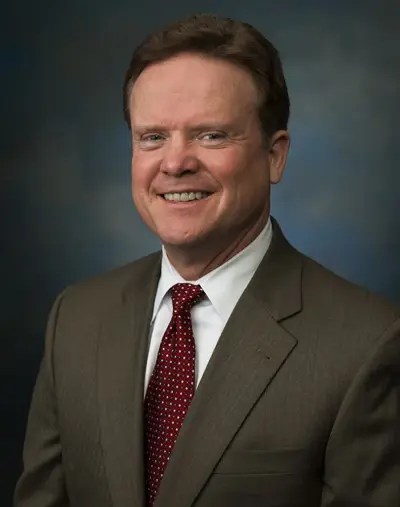
- Born: February 9, 1946
- Nationality: American
- Profession: Politician
James Henry Webb Jr. is an American politician and author. He has served as a United States Senator from Virginia, Secretary of the Navy, Assistant Secretary of Defense for Reserve Affairs, Counsel for the United States House Committee on Veterans' Affairs and is a decorated Marine Corps officer.
