Dwight D. Eisenhower Quotes
The necessary and wise subordination of the military to civil power must be sustained.
Eisenhower, Dwight D. Public Papers of the Presidents of the United States: Dwight D. Eisenhower, 1953. Office of the Federal Register, 1960.

Civilian control of the Military did not just pop in to the Constitution 11 years later. This and many other fundamental ideas had come from the State Constitutions and other documents.

Many of the fundamental principles of government that were in the United States Constitution, were already in the Constitutions of different states. Vermont had a substantial number of them. When we speak of the Constitution as a “revolutionary document” it was to the rest of the world but not to many Americans who had these concepts in their state constitutions and had been living with them for some time.

In 1776 General Charles Lee imposed a loyalty test on inhabitants of New York in the name of the new government. Four distinguished public men wrote this letter.


The irony is that it is just for the lack of this fundamental principle that Napoleon eventually became the Government and the Military in France.

There was a fear of standing armies in early America that lasted to some extent until the 20th century.


Jefferson opposed the formation of a veterans' group after the American Revolution.


The first clause is exactly that used by the state of Pennsylvania in its constitution. These had no reference to the militia as did the Virginia Bill of Rights and later the Federal Constitution.


President James Madison expressed a similar sentiment in his first inaugural address.


In principle few disagree. However, in practice the norm of American polity is that the civilian leaders must consult the military and or intelligence leaders and take their advice seriously. If they President and his civilian leadership to not take the advice, they pay a heavy political price as there is a sometimes contradictory norm that says that you must allow the military experts to run the battles. In the given case, the Iraq War, the President and Vice President made the decision to invade Iraq. However, if we believe them literally, they were heavily influenced by the intelligence agencies who assured them that Iraq had a nuclear weapon about to be completed. It was a “slam dunk” in the words of the CIA director— {633093}. JFK as a young president did not feel that he could override the CIA and DOD people who had assured him that the Bay of Pigs lading would trigger a massive uprising in Cuba. He was misled but had to take the responsibility for the fiasco where not a single person in Cuba rebelled. The President can and should override the best military advice when it is wrong, but how does he know? If he does, he always pays a short term price—even if he is right, for that is not clear for some time. Politics in a democracy is not easy in a democracy.


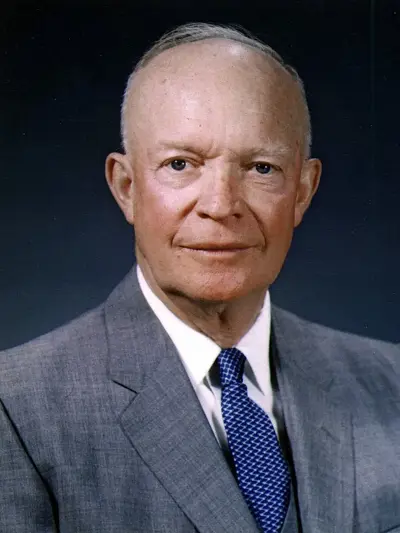
Dwight David "Ike" Eisenhower GCB OM GCS CCLH KC NPk was an American military officer and statesman who served as the 34th president of the United States from 1953 to 1961. During World War II, he became a five-star general in the Army and served as Supreme Commander of the Allied Expeditionary Force in Europe. He was responsible for planning and supervising the invasion of North Africa in Operation Torch in 1942–43 and the successful invasion of Normandy in 1944–45 from the Western Front.
