Ulysses S. Grant Quotes
The national troops acquired a confidence … at Belmont, that did not desert them throughout the war.
The battle had little strategic value, but was very significant as the Western Union troops gained an espirit de corps and a battle tested confidence.
Ulysses S. Grant, 1822-1885, 18th President of the United States (Republican, OH), Reference to the Civil War battle of Belmont, Missouri on November 7, 1861, Statement made in retrospect after the war’s end, Quoted in New York Times, October 9, 2011
Sourced by: Eigen's Political and Historical Quotations

That is the way he was killed. The phrase, “We are bound to believe that, anyhow” indicates that Stuart really realized how futile the Southern war effort would be but loyalty and patriotism required him to suspend his rational belief structure.


On October 31, 1803, Tripolitan forces captured the ship Philadelphia and imprisoned the whole crew. The Pasha (provincial governor) of Tripoli, Yusef Karamanli demanded that the United States not only pay a ransom for the prisoners but an annual tribute to Tripoli.


A Federal Naval flotilla was preparing to attack South Carolina Forts Beauregard and Walker in the area of Hilton Head and Port Royal. The navy took both forts the next day with their naval bombardment so powerful that the Confederate Rebels had to abandon both forts gaining a kind of revenge for the Confederate capture of Fort Sumter at the war’s beginning.

The South could not replenish their lost arms and munitions nor could they replace most of the men wounded, killed or taken prisoner. The Union could do both. Therefore as long as the Union army inflicted casualties, it mattered little who won which battle as long as the fighting was in the South. This critical strategic reality was never appreciated by the Union Generals who were generally reluctant to take large casualties. When Grant and Sherman finally were able to set the strategy of attrition in operation, the Union actually won most of the battles though he and Grant took very high casualties. The casualties of the Confederates were generally higher but they did not have to be for the Union to win. The Civil War was a strategic form of suicide. Ironically, at a few points the rebellion might have succeeded because of the incompetent and timid Union military leadership at the beginning of the war.

The Ottoman Turks had already conquered the Eastern Roman empire outside of Byzantium. They had overwhelming superiority and it was just a matter of time when they would take the city. Surrender would have been the sensible course, but religious passion against surrendering the holy city capital of Christendom to the Muslims was dominant in the Emperor and some of the leadership. But the morale of most was very low—and for good reason. The Ottomans soon captured the city.


This quotation is often used to illustrate the "Muslim propensity to violence". However, the context of the quotation was a historical circumstance whereby Muhammad's followers were endangered by others and the fighting was of a defensive nature. However, Islam is also a religion requiring believers to spread the religion. So, if there were people or countries or tribes that resisted conversion, the religion was interpreted by many Muslims as being under attack. Therefore violence was justified. In modern times, some religious leaders saw modernism and The West as a danger to Islam and it's tradition, therefore this and other passages of the Koran are often used to justify the terrorism that became so prevalent.
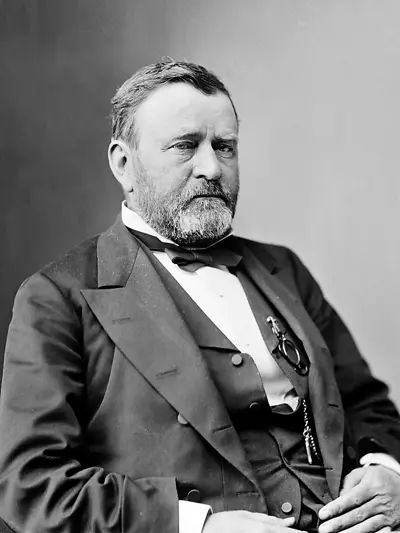
Ulysses S. Grant was an American military leader who served as the 18th president of the United States from 1869 to 1877. As president, Grant was an effective civil rights executive who created the Justice Department and worked with the Radical Republicans during Reconstruction to protect African Americans. As Commanding General, he led the Union Army to victory in the American Civil War in 1865 and thereafter briefly served as Secretary of War.
