Knute Nelson Quotes
It is in Virginia and Georgia that the war now rages and where it will continue; for at these points - Richmond and Atlanta - the enemy's main strength is concentrated.
Nelson, Knute. Quoted in The Life of Knute Nelson, by Martin W. Odland, The Lund Press, 1926.


Wade was one of the Radical Republicans who advocated a much more vigorous prosecution of the Civil War effort in the North. It is important for two reasons: First, it illustrates the position of the “Hawks” who constantly pressured Lincoln to counter the Democrat lack of enthusiasm for the fighting. Many believed that the South would come to its senses and end the rebellion. Second and more important, this is one of the quotations that apologists for the South during the Jim Crow segregation issue use to show that there was a strong desire to impoverish the South. This is partly true. Wade and the other radicals did argue to impoverish the South only so long as they were continuing the war and rebellion. They did not argue that the South should be impoverished after the war was over. However, the reality was that the Southern economy had become so dependent on slave labor, that after Emancipation, it was very difficult to rebuild the Southern Economy. With Slavery Southern Cotton sold to England was cheaper than Egyptian Cotton. If labor had to be paid, the Egyptian cotton became cheaper. The South had squandered almost all of their capital resources on financing the war and had no capital to finance modern manufacturing enterprises. And they so resented Northerners that it was very difficult for Northern businessmen who did have capital to start and finance enterprises in the South. There also was little money for good public schools after the war, and the inferior education of the South made the situation very hard to change.

That is the way he was killed. The phrase, “We are bound to believe that, anyhow” indicates that Stuart really realized how futile the Southern war effort would be but loyalty and patriotism required him to suspend his rational belief structure.

The national troops acquired a confidence … at Belmont, that did not desert them throughout the war.
The battle had little strategic value, but was very significant as the Western Union troops gained an espirit de corps and a battle tested confidence.

Lincoln and the Union leaders were still hopeful of ending the rebellion and getting things back to a pre-war footing economically. At this point they were trying to preserve components of the Southern Economy at no small cost. As that hope was shown to be futile, the Total War strategy of Grant and Sherman prevailed to the satisfaction of men like Opdycke. That actually ended the war quickly, but the Southern Economy was devastated in the process.

Sherman had friends in the South and he saw rebellion and war coming. Most Southerners had a romanticized view of war and were so wrapped up in trying to preserve their economic and cultural way of life that they did not think through the implications of such a war. After and during the war, Sherman was particularly angry with the Southerners who had brought such terrible casualties and destruction upon the land and its people and he was the leader of the March through Georgiam the most effective and humiliating campaign against the South.
This is an important quotation because it helps to dispel a myth that the Civil War was not about slavery. That was the reason that the rebelling states gave for secession, but apologists for the Confederacy have claimed that the average soldier on both sides did not care about slavery. (Two thirds of the Southern Soldiers came from families that did not own slaves; nonetheless it was clear that the main motivation of the Confederate Soldier was to protect the institution of slavery, while that of the Union soldiers was to destroy slavery.) Professor Manning found this in her book: What This Cruel War Was Over: Soldiers, Slavery, and the Civil War.

On his deathbed he claimed to Kelly that he had been offered command of the Army of the Potomac but was not willing to "pay the price" which he claimed was to accept the terms. Pleasonton, always more of a bureaucrat than an ideologue or strong leader, like many Union officers, only wanted to defang the South so that they could not threaten the rest of the states but was not convinced that "crushing" the rebels was worth the cost or that slavery or the reelection of Lincoln was worth it. There is no independent verification of his receiving the offer, but what is more likely was as the Cavalry Commander of the Army of the Potomac he was "sounded out" on the subject.

This is one of the documented examples of the use of the phrase “God is on our side.”


The Virginia Campaign of May 1864 was clearly the beginning of the end of the war. This was clear at the time, not only to the military leaders of both sides, but also to the media and thence the general public in the North. At the beginning of the war the Army of the Potomac, the largest Union Army was commanded by McClellan whose concerns were with his own political career and not winning the war. He had an aversion to heavy fighting and did not see the war strategically as Lincoln, Grant and Sherman did: To cripple the capacity of the South to wage war. So the early history of the Army of the Potomac was a series of undecisive battles which were either standoffs or the Confederates won despite the much larger and better armed and equipped Union army. As soon as McClellan was replaced, things began to turn around and when Grant was selected for Command of all Union Troops, the Army of the Potomac performed much better, including taking Richmond, the Confederate Capital.

Much of the South was so insular that people knew nothing about the notion of abolition and just assumed that no one would ever consider freeing the slaves. Many never knew that it was the South that first fired on the Union troops and flag. If the North won the war, the assumption was that Northerners would then own the plantations and the valuable slaves. In reality, while all slaves were emancipated in the South, very few plantations and farms were confiscated from their Southern owners by Northerners despite the fact that there was political pressure in the North to confiscate the land of all rebels who had committed treason and use the value to repay the Union bonds and care for the wounded Union veterans and the widows of dead Union Soldiers. Eggleston was an accomplished writer who had served in the Confederate army of the Civil War. 20 year after the war he wrote a series of articles for the prestigious Northern Atlantic Monthly trying to convey the war from the Southerner’s point of view.

The Civil War produced more deaths than all other American wars put together. Lee’s skill and gentlemanly demeanor subdue the fact that his treasonous efforts caused more American soldiers to die than the entire Second World War—and yet some Americans regard him as a hero while others see him as a traitor.

This cry echoed throughout the North where the public wanted a full invasion of the capital of the Confederacy to put an end to the rebellion. However is was not clear what effect that would have on the Border States—Maryland and Kentuucky—and many politicians thought that the South would “come to its senses” once they realized what they had done. But the South would not change its course, and the Union Generals in Command were very reluctant to actually invade the South. It was only after the South attacked in the North that the Union Military began to realize that this was a Civil War that would not be resolved politically.


Two days later Lee surrendered at Richmond, and the Civil War was over. On April 14, Lincoln was assassinated. He died the next day.
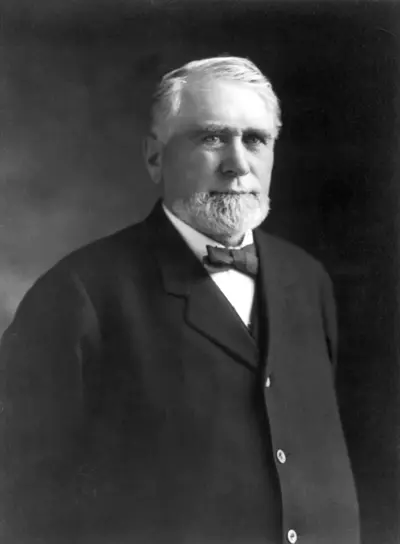
Knute Nelson was an American attorney and politician active in Wisconsin and Minnesota. A Republican, he served in state and national positions: he was elected to the Wisconsin and Minnesota legislatures and to the U.S. House of Representatives and the United States Senate from Minnesota, and served as the 12th governor of Minnesota from 1893 to 1895. Having served in the Senate for 28 years, 55 days, he is the longest-serving Senator in Minnesota's history.
