George S. Patton Quotes
Americans love a winner. Americans will not tolerate a loser. Americans despise cowards. Americans play to win all of the time. I wouldn't give a hoot in hell for a man who lost and laughed. That's why Americans have never lost nor will ever lose a war; for the very idea of losing is hateful to an American.
George S. Patton, 1885-1945, U.S. Army General, Speech to the Third Army, 1944
Sourced by: Eigen's Political and Historical Quotations


The national troops acquired a confidence … at Belmont, that did not desert them throughout the war.
The battle had little strategic value, but was very significant as the Western Union troops gained an espirit de corps and a battle tested confidence.

A Federal Naval flotilla was preparing to attack South Carolina Forts Beauregard and Walker in the area of Hilton Head and Port Royal. The navy took both forts the next day with their naval bombardment so powerful that the Confederate Rebels had to abandon both forts gaining a kind of revenge for the Confederate capture of Fort Sumter at the war’s beginning.

He always appeared in a military uniform after that.

Adams is quoting from Cato, a play by Joseph Addison.


At the time although the United States was providing material assistance to England, there was still the naïve belief that America could avoid becoming involved in WWII.

Like many Americans who thought it bad policy to go to war in Iraq in the early 21st century and then became ardent military supporters to win the war rather than lose, Scott maintained that victory in WWI was crucial even though he had opposed entry into the war.


On October 31, 1803, Tripolitan forces captured the ship Philadelphia and imprisoned the whole crew. The Pasha (provincial governor) of Tripoli, Yusef Karamanli demanded that the United States not only pay a ransom for the prisoners but an annual tribute to Tripoli.
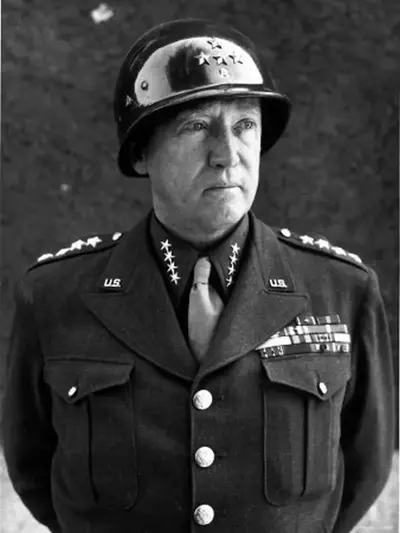
George Smith Patton Jr. was a general in the United States Army who commanded the Seventh United States Army in the Mediterranean theater of World War II, and the Third United States Army in France and Germany after the Allied invasion of Normandy in June 1944.
