Robert McNamara Quotes
The military establishment is an instrument – not a shaper – of national policy. Its members – as free Americans – are entitled to their views on the issues of the day, and they have every right to try to make their views effective through the ballot. They do NOT have the right, however, to use the military establishment to advance partisan concepts or alter the decisions of the elected representatives of the people.
Robert McNamara,1916-2009, U. S. Secretary of Defense (Democrat), President, World Bank, Testimony, Senate Armed Services Committee, September 6, 1961
Sourced by: Eigen's Political and Historical Quotations


The irony is that it is just for the lack of this fundamental principle that Napoleon eventually became the Government and the Military in France.


The only soldier ever so honored

Jefferson opposed the formation of a veterans' group after the American Revolution.


In 1776 General Charles Lee imposed a loyalty test on inhabitants of New York in the name of the new government. Four distinguished public men wrote this letter.


Marshall was then the chief of staff of the army. And political groups were trying to organize soldiers to support or oppose different legislation affecting the military. Subsequently, the role of active duty military personnel in politics was severely circumscribed by law and regulations.


The public desire to know about and influence the details about diplomatic affairs is not just a problem of the 21st century. Here the Secretary of State describes it in 1922.


There is frequently a disagreement between the military and civilian leaders just as there are disagreements among most political personnel. Hawks, and people who have had experience in the military tend to think that military advice on military matters should be determinative with the President and Congress. Others tend to believe that military advice should be considered, but if it were always adhered to, there would be no point in having civilian control over the military. See {639667} for an example of when military leadership advice prevailed and it was a mistake.

In principle few disagree. However, in practice the norm of American polity is that the civilian leaders must consult the military and or intelligence leaders and take their advice seriously. If they President and his civilian leadership to not take the advice, they pay a heavy political price as there is a sometimes contradictory norm that says that you must allow the military experts to run the battles. In the given case, the Iraq War, the President and Vice President made the decision to invade Iraq. However, if we believe them literally, they were heavily influenced by the intelligence agencies who assured them that Iraq had a nuclear weapon about to be completed. It was a “slam dunk” in the words of the CIA director— {633093}. JFK as a young president did not feel that he could override the CIA and DOD people who had assured him that the Bay of Pigs lading would trigger a massive uprising in Cuba. He was misled but had to take the responsibility for the fiasco where not a single person in Cuba rebelled. The President can and should override the best military advice when it is wrong, but how does he know? If he does, he always pays a short term price—even if he is right, for that is not clear for some time. Politics in a democracy is not easy in a democracy.


He had been asked by other delegates what Franklin thought they had just created.

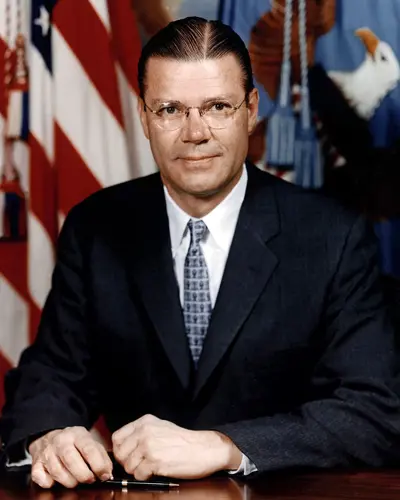
Robert Strange McNamara was an American business executive and the eighth United States Secretary of Defense, serving from 1961 to 1968 under Presidents John F. Kennedy and Lyndon B. Johnson. He played a major role in escalating the United States' involvement in the Vietnam War. McNamara was responsible for the institution of systems analysis in public policy, which developed into the discipline known today as policy analysis.
