Samuel Adams Quotes
The man who dares to rebel against the laws of a republic ought to die.
Samuel Adams, 1722-1803, Governor of Massachusetts, Member of the Continental Congress, Commenting on Shays Rebellion, Lockwood et al., Western Massachusetts
Sourced by: Eigen's Political and Historical Quotations

government appointed officials and bureaucrats Savonarola was a very hated ruler, opposed to any kind of a Parliament or assembly. And the penalty for advocating for a Parliament was severe. The Signoria were the various government appointees and clerks. They were influential in Florence and hence they were silenced by the mot draconian methods. There was a movement throughout Italy for parliaments and less arbitrary government. Savonarola was particularly strict in his rooting out sin and cruel in his punishments and hence very unpopular. He was also under the delusion that God himself had called on him to preach his strict version of morality. Some of the Nobles reached the Pope with many of Savonarola’s extreme statements and Savonarola was excommunicated and burned as a heretic. His executioner gloated that he was burning Savonarola before the powerful priest could burn him as he had done so many others.

Marie Joseph Paul Yves Roch Gilbert du Motier

In 1786, many veterans of the American Revolution had still not yet been paid the promised wages for their military service by the new national government. The States however had imposed taxes on farms to fund the new state governments and pay the state’s war debts mostly to rich merchants. Many veterans could not pay the taxes and some were thrown into debtors’ prison, and others had their farms foreclosed. Led by Daniel Shays, a small group of Massachusetts men conducted a mini rebellion by closing local court houses and tried to take over the local state armory. The Governor put down the rebellion by force and the rebels were jailed. Samuel Adams, the former governor, recommended the death penalty (see {630527}), and several of the rebels were executed. Thomas Jefferson disagreed, via this famous quotation. This was one of the early crises of the new country and it was handled very poorly and unfairly.

Adams' interesting distinction was later taken much further by many communist countries in their treatment of "enemies" of "peoples' governments."

This is not strictly true although it was in many cases in Mises career. However many of the great scientists, inventers, artists, entrepreneurs, and writers have been very positive about the government of the time. Many even credited the government for enabling or assisting their achievement. Even in Nazi Germany there were a few scientists who admired the Hitler government. However, in America, the educational system which gave so money contributors to humanity their start and preparation and in many cases government funding or previous research or facilities were recognized as instrumental in the development of the innovation. Many of the artists and writers of the 1940s-1960s credited the New Deal for their development and opportunity to create many of their great contributions. Internet entrepreneurs who changed the world in the late 20th century all acknowledge the Federal Government role in developing and deploying if the Internet. And there are few Nobel Prize winners who do not acknowledge Federal Scientific Research Grants and previous government funded and sometimes conducted (like the Human Genome) research that helped with or made the contribution. Even contributions like the telegraph and the railroad depended in initial government funding to make their contribution. Private capital could not be found to take the risk of financing these radically new ideas.
In 1786, many veterans of the American Revolution had still not yet been paid the promised wages for their military service by the new national government. The States however had imposed taxes on farms to fund the new state governments and pay the state’s war debts mostly to rich merchants. Many veterans could not pay the taxes and some were thrown into debtors’ prison, and others had their farms foreclosed. Led by Daniel Shays, a small group of Massachusetts men conducted a mini rebellion by closing local court houses and tried to take over the local state armory. The Governor put down the rebellion by force and the rebels were jailed. Adams, the the former governor, recommended the death penalty and several of the rebels were executed. Thomas Jefferson disagreed. See {604839} for his famous quotation on the subject. This was one of the early crises of the new country and it was handled very poorly and unfairly.


She resigned her political job even before West took office. Although there were many in the Tea Party crowd who were enthused by her call to violence if they could not achieve political results, there were also many who did not applaud and were clearly distressed by her statement. The Tea Party is not a classical party and it includes a wide variety of people who have very different views on most issues.


The revolution turned on many of its initiators including Vergniaud. He was guillotined along with other Girondists.


Several years before the Battle of Bunker Hill, revolutionary activity had already broken out in the American colonies—See {634132} for an example. This law gave the British authorities much more “clout” in dealing with the “seditious” American activities. It protected English law enforcement officials from being tried in local Colonial courts for murder or assault in putting down insurrections. George Washington and other Patriots were outraged over this law. See {634131}.


Trump was then President Elect who already had a large staff helping him fomake the transition. He still went off on his own with this state,ment whiich runs afoul of the Constitution which he would soon sware to defend when he took the Oath of Office. The Supreme Court had unequivocably ruled that the burning of the flag was a type of political speech and as such could not be curtailed or punished by the government. The penalty of a loss of citizenship was another constitutional thicket. In addition. in the hisoty of the country,, it had never been used as a punishment for breaking domestic law.


Yazid ibn al-Walid ibn 'Abd al-Malik. This is an Islamic doctrine that operates to this day together with the stricture that a bad ruler must be endured and not revolted against UNLESS he does not follow his Islamic religious obligations. This is why many Islamic rulers curry favor with the clerics. As long as they do not claim he is violating the word of God, his rule is safe from revolution. However, if the clerics turn on him, he is in deep trouble. Thus Saudi Arabia endures a monarchy and the ruling family pays the Wahhabi enormous sums to avoid their religious condemnation.

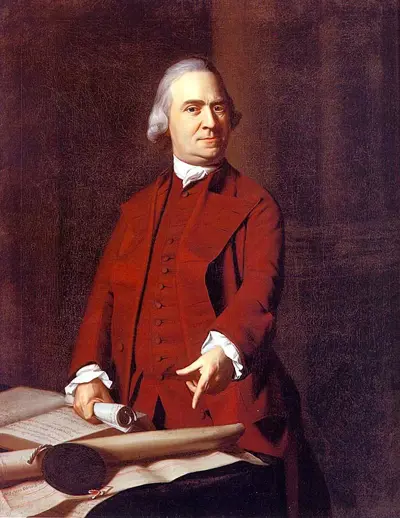
Samuel Adams was an American statesman, political philosopher, and one of the Founding Fathers of the United States. He was a politician in colonial Massachusetts, a leader of the movement that became the American Revolution, and one of the architects of the principles of American republicanism that shaped the political culture of the United States. He was a second cousin to his fellow Founding Father, President John Adams.
