Charles Inglis Quotes
Suppose we were to revolt from Great-Britain, declare ourselves Independent, and set up a Republic of our own-what would be the consequence? - I stand aghast at the prospect - my blood runs chill when I think of the calamities, the complicated evils that must ensue, and may be clearly foreseen.
Charles Inglis, 1734–1816, Anglican Clergyman, Rector of Trinity Church of New York, The True Interest of America Impartially Stated, 1776
Sourced by: Eigen's Political and Historical Quotations

Americans were by no means united in wanting to take up arms against Britain. Relatively few of the loyalist quotations have come down to us, but here is one. It also illustrates why some Americans wanted complete independence: So that they could escape their debts to English merchants. Most however had more noble and unselfish motives. As a matter of fact, the American Revolution is unusual in the sense that there were so many men of substance who sacrificed much of their material wealth for the American ideal. There were also the rogues and opportunists as Galloway describes.

England had gone through a bloody Civil War with the Parliament on one side and the King on the other. The King lost and was beheaded later that year. See {597353}.

This letter drafted by Adams was sent by the Congress complaining about the Closing of Boston Harbor. The letter was right about the consequences except for the last; the rift between American and the mother country was not only healed but there is no European nation that has been closer to the United States over the years.

Fox was one of the opposition leaders who were opposed to the heavy handed policies that the British King and Government had used.


This was written more than a year before the “blows” began. It took time to ship the men and supplies to America and the British did not handle that task with much efficiency.


There was an hatred of the English—especially for displacing the Roman Catholic Church in Ireland as well as England. See {639436} and {639434}.


This quotation shows that the dissent leading to the American Revolution did not emerge suddenly in 1776 after the Battle of Bunker Hill. Dissent, sedition and even violence was documented here in 1774. Salem at the time was the second largest port in the colony and the customs tax collectors—Loyalist Americans—were run out of Salem.

This quotation shows what prompted the Texas rebellion against Mexico. Military dictators had taken over the Federal Government of Mexico and Mexico was no longer a free country.


The ambassador's hyperbole caused or was the excuse for President Lyndon Johnson to send the marines into the Dominican Republic. There were only two American civilian casualties—both were reporters accidently shot by U.S. Marines.


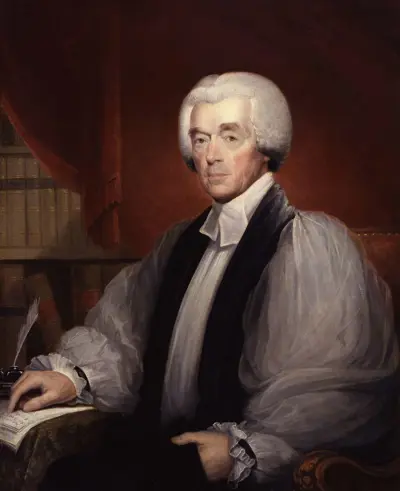
Charles Inglis was an Irish clergyman who was consecrated the first Anglican bishop in North America, although technically of the Diocese of Nova Scotia.
