Marquis de Lafayette Quotes
The Huron and Iroquois forests are peopled by my friends; with me, the despots of Europe and their courts are the savages.
Lafayette, Marie Joseph Paul Yves Roch Gilbert Du Motier. Memoirs, Correspondence and Manuscripts of General Lafayette. Vol. 2, Saunders and Otley, 1837.


What is interesting is that when he cites the dreadful facts about American slavery, he never points out that the American slave traders rarely raided the villages and captured the slaves themselves. Most often this was done my Khamenei’s Muslim brethren slave traders who dominated the slave trade in Africa. Nor does he point out what after realizing the evil that Americans perpetrated with slavery, we ended it in the 1860s. Saudi Arabia, the central nation of Islam, did not make slavery illegal until 100 years later, and even today, there are many Saudi’s who get caught practicing slavery with household servants and forms of indentured servitude. And while Christians and the Bible tolerated slavery, the Koran and the Prophet never once condemn the practice of slavery. Democracy at any point in time is not always morally right, but it is a process by which under pressure from the people it improves over time because the people can change it and do.


When the British first colonized South Africa, the area they used was akmost uninhabited or very sparcely so. However, some Black tribes (including the Zulus) were moving from the north and themselves were colonizing or annexing the areas to their kingdom. The British were most interested in Trading so did not have large land asperations. The Dutch white Boer Africanners, in contrast, wanted to farm the lands and use the range for their cattle. They wanted the land. The English policy was that there would be friendly relations with the Black tribes surrounding their Cape Colony and no one should take their land. However the Boers started attacking the Black areas and seizing their farms and villages. At first, the English assumed that the Blacks would easily be able to ward off the invasion as the Afrikanners had no professional troops like the British. However, the neighboring tribes were not very warlike or good fighters. They were being overrun by the Zulus coming from the North and the Boers from the South. The British Government had a real problem in that they would have to have British soldiers fight the white Afrikanners if they wanted to stop the illegal white invasions. This was the root of the Boer War where the British would be fully at war with the Africanners.


Published 100 years after it was written. This is the first known written statement of what became a de facto policy regarding the American Indian.


The Lenape Tribe (Delaware Tribe) were the strongest Indian nation in America until they were supplanted by the Iroquois and then dominated by the Colonial whites who took much of their land. See {592309}.

In March of 1814 Jackson led a force to track down the Red Sticks. When they did so at Horseshoe Bend. Jackson made a frontal assault on the Red Stick Breastworks which might have gone badly had not a cotangent of Cherokee Indians—also concerned about the Red Sticks attack on their settlements, assaulted the Red Sticks from the rear. The Red Sticks, caught between the two uncoordinated attackers, lost over 900 men and the battle which then decided the war. In this Battle, Junaluska, a Cherokee, saved Jackson’s life. Years later he would not differentiate between the different Indian peoples and contrary to a Supreme Court order, forced the Cherokee from their settled farms and ranches and moved them to the Oklahoma Territory.

The New Englanders were Jefferson’s greatest foes as they tended to be supporters of John Adams, Jefferson’s great political enemy at the time. Jefferson felt that the policies of George Washington and John Adams tended to favor the North to the disadvantage of the South. Ironically, the Northerners were convinced of the bias of the administration policies in the other direction—the pandering to the South especially on the issue of slavery.

Gold had been discovered in the Black Hills lands that were sacred to the Lakota Sioux and were reserved for exclusive use of the Indians by the Fort Laramie Treaty. Greedy whites, ignoring the treaty provisions not only entered the Black Hills to pan and mine for the gold, but killed many Indians they ran across Sherman was angry and wrote to his old friend President Grant. Grant, now a political, had to contend with public opinion that thought it absurd that gold should not be mined because a few Indians regarded the land as sacred. Meanwhile Grant was working with a few others to portray minor clashes between whites and Indians in the Black Hills as violent and dangerous Indians breaking the treaty.


Exploring large parts of Africa
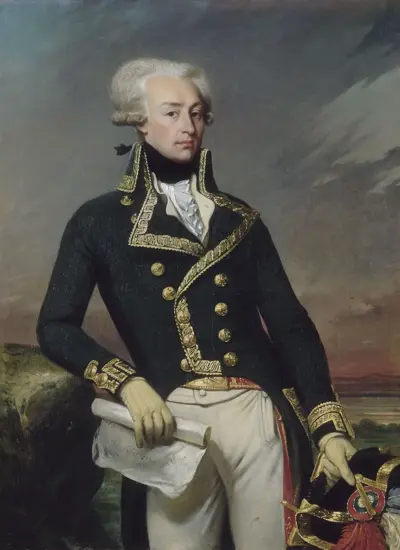
Marie-Joseph Paul Yves Roch Gilbert du Motier, Marquis de La Fayette, known in the United States as Lafayette (/ˌlɑːfiːˈɛt, ˌlæf-/, French: [lafajɛt]), was a French aristocrat and military officer who fought in the American Revolutionary War, commanding American troops in several battles, including the siege of Yorktown. After returning to France, he was a key figure in the French Revolution of 1789 and the July Revolution of 1830. He has been considered a national hero in both countries.
