Nelson A. Miles Quotes
To illustrate to the Indians the advantages the white race had in the telephone I divided a body of warriors from Sitting Bull's camp into two parties and had them talk to each other over the telephone line.
Miles, Nelson A. Personal Recollections and Observations of General Nelson A. Miles. Werner Company, 1896.


The Iroquois were generally recognized, even by the other tribes and nations, and the most advanced and most powerful of the Native Americans. Their example was critical in shaping the policies and behavior of all the Indians. At the time “Western” Indians referred to those in Pennsylvania, Ohio, Kentucky, Illinois and those West of the Eastern seaboard. West Coast and Plains Indians were not known generally known to the colonists and those nations had no knowledge of the Iroquois. Johnson himself married an Iroquois woman.

President Thomas Jefferson and the Congress worked at making a workable set of relationships with the Indians. Here Congress gave Jefferson a fund so that he could invite influential Indian leaders to Washington and give them presents. The hope was that the Indian leaders would see the achievements of white society and then work to transform their people to this more desirable way of life. While this was a good strategy with a few Indian nations, the reaction of most Indian leaders was being very impressed but not really wanting to trade their existing lifestyle, customs and values for the undeniable advantages that American society could bring. Both the white and Indian leadership miscalculated, Jefferson believed that as soon as the Indian leaders could examine the two alternative societies, they would clearly choose to change. The Indians were so impressed with the sincerity, reasonableness, and friendliness that the white leadership exhibited, that the Indians did not realize that a large part of white society was different from the leadership and that the leaders spoke for and could control the other whites.


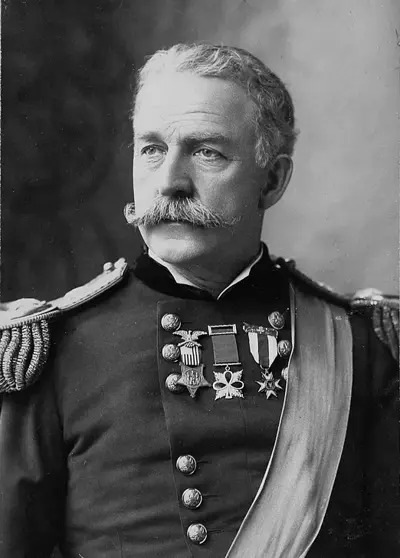
Nelson Appleton Miles was an American military general who served in the American Civil War, the American Indian Wars, and the Spanish–American War. From 1895 to 1903, he served as the last Commanding General of the United States Army before the office was abolished.
