John C. Calhoun Quotes
The neighboring tribes are becoming daily less warlike, and more helpless and dependent on us … They have, in a great measure, ceased to be an object of terror, and have become that of commiseration.
John C. Calhoun, 1782-1850, Vice President of the United States (Democrat, SC) U. S. Congressman & Senator (Democrat, SC), Speech, House of Representatives, December 5, 1818.
Sourced by: Eigen's Political and Historical Quotations


Miller was the first Black American admitted to a Graduate Program—Johns Hopkins—in Mathematics


First Published American Indian Author
That is exactly what happened. The Spanish raped and interbred with the native women in the Americas and it was their offspring who ended up dominating South and Central American societies.


The title of this controversial poem became a rallying cry for imperialists and anti-imperialists both. The imperialists saw it as a justification for expansionism and colonialism—that the white had a moral responsibility to bring civilization to the other races. To the anti-imperialists it was a racist justification for imposing Christian values on the rest of the world which didn’t want them. In the quotation example here, the poem was used to state a dilemma of foreign aid and trying to bring democracy and freedom to the world.


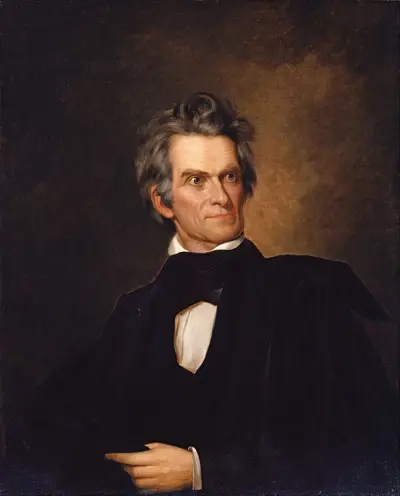
John Caldwell Calhoun was an American politician and political theorist from South Carolina who held many important positions including being the seventh vice president of the United States from 1825 to 1832, while adamantly defending slavery and protecting the interests of the white South when its residents were outnumbered by Northerners. He began his political career as a nationalist, modernizer, and proponent of a strong national government and protective tariffs. In the late 1820s, his views changed radically, and he became a leading proponent of states' rights, limited government, nullification, and opposition to high tariffs. He saw Northern acceptance of those policies as a condition of the South remaining in the Union. His beliefs and warnings heavily influenced the South's secession from the Union in 1860–1861.
