Sir Eric Geddes Quotes
The Germans, if this Government is returned are going to pay every penny; they are going to be squeezed as lemon is squeezed – until the pips squeak. My only doubt is not whether we can squeeze hard enough, but whether there is enough juice.
Sir Eric Geddes, 1875-1937, English Conservative politician, First Lord of the Admiralty, Speech, Beaconsfield Club, Cambridge, December 10, 1918
Sourced by: Eigen's Political and Historical Quotations


The railroads were nationalized for WWI and he ran them all as a government official. There have been political situations like this one where public opinion was so intense and extreme that any action that satisfied public opinion would have very negative aspects and/or be unrealistic or impossible while realistic solutions are unacceptable to public opinion. Usually, the reaction of the politicians is to punt and simply not deal with the issue or problem but claim that they are seeking a solution.
The Germans, having invaded France and other countries in WWI, were determined in the Treaty of Versailles to be responsible for the war. They were to pay reparations to France and other countries to cover the costs to those countries of financing the war and rebuilding what the German invasion destroyed. But Germany too was destitute and needed capital to rebuild and if they paid the reparations whey would have to lay a very heavy tax on all Germans and still would not have enough to rebuild their nation and economy. What made the situation much worse was the fact that most of the wealthy German capitalists—many of whom had profited from supplying military weapons and supplies during the war—took all their money out of Germany, so the wealthiest Germans could not be taxed much at all. Auld, and many others tried to find an equitable solution, but that never happened and German resentment carried over into WWII where the Germans again invaded France.


The hatred of the English was so great in Germany during WWI that this phrase substituted for the usual “Good Morning” and “Good Bye” etc.

The president believes that Israel was created solely to atone for the Holocaust. He has suggested that Israel should be in Europe. He does not mention the fact that that most of the Middle East including Israel, Palestine, Syria, Jordan, Lebanon, and others where part of a Jewish Kingdom over 2000 years ago and Jews were in the Holy Land ever since. He also does not consider the fact that Arab leaders were allies of the Nazis and supported the Holocaust.

Nicolson was an eyewitness to the proceedings.

Their fear was that wages in Germany would be greatly depressed by the requirement for reparations. And it was the capitalists of the world that had loaned money to the powers to finance the war. Most of the reparations they feared would go to repay those loans.

1st Earl Lloyd-George of Dwyfor. Over half a century later a Israeli Prime Minister also used the phrase. {594350}

The peace delegation squabbled among themselves over strategies and tactics and the delegation became a fiasco.


While Queen Mary was presenting medals to British soldiers during World War I, she said this to a soldier who had exclaimed “No more bloody wars for me”.
1st Earl Lloyd-George of Dwyfor. Demands for German reparations were very popular with the British electorate at the end of World War I.


He was warning the majority and blaming them for what was to happen. Ironically, at the end of the First World War, Germany was so harshly treated because the allies felt that the Germans had been aforewarned not only by others but by opposition Germans as well.

Just before the outbreak of hostilities of WWI. The German Social Democratic Party was a minority party in Germany and the majority was very anxious to go to war.

The suffragette movement was split by WWI and the issue of pacicism. See {621265} for the pro war factional view.


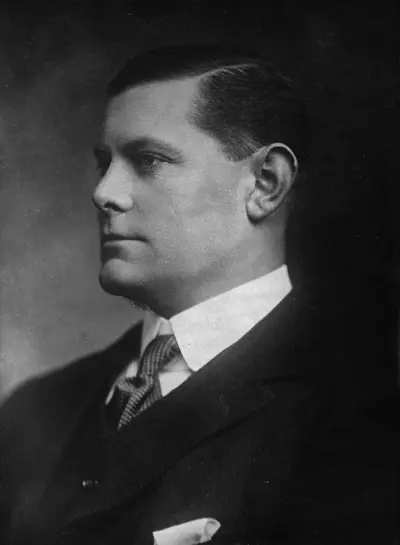
Sir Eric Campbell Geddes GCB GBE PC was a British businessman and Conservative politician. With a background in railways, he served as head of Military Transportation on the Western Front, with the rank of major-general. He then served as First Lord of the Admiralty (with the rank of vice-admiral, despite its being a political position) between 1917 and 1919. He then served as the first Minister of Transport between 1919 and 1921, in which position he was responsible for the deep public spending cuts known as the "Geddes Axe".
