Joseph Jacobs Quotes
The first two crusades brought the flower of European chivalry to Constantinople and restored that spiritual union between Eastern and Western Christendom that had been interrupted by the great schism of the Greek and Roman Churches.


Christians of 1 thousand years ago were barbarous and immoral compared to Christians of today, even though their Bible is the same. He argued that Islam may well also reform. In looking at Islam compared with Judaism, Christianity, Hinduism and Buddhism, it is useful to remember that these are much older religions than Islam. They have had more time to reform and develop. Compare Christians 700 years ago to Christians today. They were pretty barbaric in comparison. They burned heretics at the stake and "witches" also. But Islam is 700 years younger than Christianity and thousands of years younger than the other 3 religions mentioned. It may well need more time to develop and reform.

Aeneas Sylvius Piccolomini. Early in his career, as Secretary to the Emperor, he was assigned to oversee the education of the young king of Bohemia.
Different Christian European powers moved in and out of alliances with each other and with the Islamic Ottoman Empire. So Christians were not unified and whenever a Christian country was at war with the Muslims some Christians perceived it as an assault on Christianity—except that there were Christian allies of the Muslims. Later many Muslims would see any conflict with a Christian country as an attack in Islam even when Muslim nations were allied with the Christians as was Turkey at the end of the 20th century. Turkey was a member of NATO and was therefore seen as traitors to Islam by some Muslims. There has always been this tendency to see conflict in terms of religious or ethnic hostility where convenient.

In addition to the Muslim world during the Crusades losing control of the Holy City for the first time in 400 years, the Christians stabled their horses on the Al Axa Mosque and the Dome of the Rock, two of Islam’s holiest places. In addition, the Crusaders, after taking the city, slaughtered most of the inhabitants—Muslims, Jews and even fellow Christians who were Eastern Orthodox—more than 30,000 in just a day or so. It was a reign of terror on a scale that even today, it is shocking to most. So where as to us the Crusades were an interesting of aberrant part of history, to many Muslims of the Middle East the thought or discussion of the Crusades is traumatic even today.

The Turks could not take the city then, but they did 56 years later in 1453.


When the Turks defeated the Christians, the only explanation many Christians could conceive of was that God was on the side of the Turks.

At the time of the writing she was an ex-queen. See {618099} for Frederick’s own view of the Greeks. The Crusades were going badly for the Christians at this point. The Greek Emperor had, after promising to be a part of the Christian alliance, made a separate treaty with Saladin and the Muslims, making him an outcast and sewing the seeds of the schism between the Eastern and Western Christian Churches. In a year, the Western Christians would sack Constantinople, and murder and plunder their fellow Eastern Christians. The two previous Greek Emperors were suspect from the Western point of view, but the treaty with Saladin “proved” what had been suspected about the Greeks who were now allied with the hated Muslims.

The Papacy was at one of it’s lowest points. Two men, Clement and Urban, both claimed the Papacy and each had raised an army to fight the other. Each was promising indulgences to those who would fight, and in a modality similar to the Muslim terrorists of the 21st century, the soldiers were promised ascendancy to Heaven if they fell in battle for such a holy cause. The armies of the popes marched under the cross as their banner, and Wycliffe found that obscene and actually wrote a treatise saying so. See {618087}.

In 1453 the Ottoman Turks shocked Christendom by capturing Constantinople, the capital of the Byzantine Eastern Christian Empire. It was always perceived as a religious conflict between Christians and Muslims but that is an over simplification of a very complex sociological, religious, and political historical period. As this quotation shows us there were many Christians aiding the Muslim side. There were also many Muslims fighting on the Christian side.
The Christian world was in a great struggle with Islam. The Sultans were trying to take over Constantinople—the seat of the Eastern Orthodox Church. The Western Catholic Church in Rome also yearned for unification but under the Pope and his Cardinals. Notaraus feared them more than the Ottomans. Howeer, it was the latter who conquered Constantinople (Byzantium) in 1453 and executed the “first family” when Notaras would not deliver his children to Sultan Mehmet as hostages for assuring “good behavior” by the Greek community.


Ottoman Turkish Sultan Mehmed II Aeneas Sylvius Piccolomini. 6 years earlier, the Ottoman Turks, had captured Byzantium (Constantinople, later Istanbul), the capital of the Eastern Roman Empire. The Pope had called together the rulers and leaders of Christendom to organize a common defense in this war of civilizations. This was the period where Christian Islamophobia began. The Muslims had a religious duty to convert the rest of the world to Islam and adopt Islamic law (Sharia). However, so did the Christians. Sultan Mehmed II, when he conquered Byzantium, did not require the conversion of the Christians in the great city. He took the greatest churches, but by and large left the Christians to worship in their own Churches. The Muslims at the time were far more tolerant of Christians (and Jews) than the Christians were of Muslims (and Jews). Like in the 21st century, there was much Islamic doctrine and reality to be worried about, but not all the Muslims were as rabid and extreme as Eastern paranoia suggested in the 15th century or the 21st.
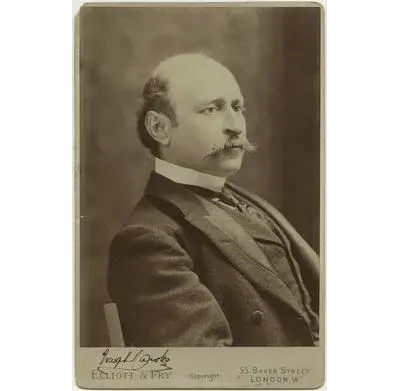
Joseph Jacobs was an Australian folklorist, translator, literary critic, social scientist, historian and writer of English literature who became a notable collector and publisher of English folklore.
