Tariq Ali Quotes
Stories of the Crusades are still told in Moslem cafes and families as if they occurred yesterday.
In addition to the Muslim world during the Crusades losing control of the Holy City for the first time in 400 years, the Christians stabled their horses on the Al Axa Mosque and the Dome of the Rock, two of Islam’s holiest places. In addition, the Crusaders, after taking the city, slaughtered most of the inhabitants—Muslims, Jews and even fellow Christians who were Eastern Orthodox—more than 30,000 in just a day or so. It was a reign of terror on a scale that even today, it is shocking to most. So where as to us the Crusades were an interesting of aberrant part of history, to many Muslims of the Middle East the thought or discussion of the Crusades is traumatic even today.
Tariq Ali, Pakistani Writer & Editor, New Left Review, The History Channel, The Crusades: The Crescent and the Cross, November 12, 2005
Sourced by: Eigen's Political and Historical Quotations

Christians of 1 thousand years ago were barbarous and immoral compared to Christians of today, even though their Bible is the same. He argued that Islam may well also reform. In looking at Islam compared with Judaism, Christianity, Hinduism and Buddhism, it is useful to remember that these are much older religions than Islam. They have had more time to reform and develop. Compare Christians 700 years ago to Christians today. They were pretty barbaric in comparison. They burned heretics at the stake and "witches" also. But Islam is 700 years younger than Christianity and thousands of years younger than the other 3 religions mentioned. It may well need more time to develop and reform.

When the Turks defeated the Christians, the only explanation many Christians could conceive of was that God was on the side of the Turks.

Different Christian European powers moved in and out of alliances with each other and with the Islamic Ottoman Empire. So Christians were not unified and whenever a Christian country was at war with the Muslims some Christians perceived it as an assault on Christianity—except that there were Christian allies of the Muslims. Later many Muslims would see any conflict with a Christian country as an attack in Islam even when Muslim nations were allied with the Christians as was Turkey at the end of the 20th century. Turkey was a member of NATO and was therefore seen as traitors to Islam by some Muslims. There has always been this tendency to see conflict in terms of religious or ethnic hostility where convenient.

He was the scientist most responsible for the Pakistani nuclear bomb capability. However, he took his technological knowledge and without the knowledge of his government and contrary to their promises to the United States and other nations, accepted large secret payments to assist third world dictatorships to begin a nuclear weapons program. When he was caught, he was arrested but he is one of the very few world class scientists that Pakistan had ever had and was one of the most famous and popular Pakistani figures. The Pakistani Supreme court ruled that he was free to move about Pakistan but may not leave the country, and he is supposedly monitored to prevent his sharing nuclear secrets with terrorists and dictatorial states. In 2012 he formed his own political party.
At the time of the writing she was an ex-queen. See {618099} for Frederick’s own view of the Greeks. The Crusades were going badly for the Christians at this point. The Greek Emperor had, after promising to be a part of the Christian alliance, made a separate treaty with Saladin and the Muslims, making him an outcast and sewing the seeds of the schism between the Eastern and Western Christian Churches. In a year, the Western Christians would sack Constantinople, and murder and plunder their fellow Eastern Christians. The two previous Greek Emperors were suspect from the Western point of view, but the treaty with Saladin “proved” what had been suspected about the Greeks who were now allied with the hated Muslims.

The Christian Crusaders and the Muslim extremists through this day are not the only peoples who described atrocities as “Holy war.”
The “area” was Chechnya, a province of Russia with a substantial Muslim population. Islamic forces were not as unhappy in the Russian Communist days in the Christian Orthodox church was subdued, but after the fall of Communism, the Russian Orthodox church had a revival, and that exacerbated all the independence aspirations that existed for years in Chechnya.

One remarkable aspect of this quote is that most Western nations have the exact same perception he claims the Islamic word does of what the West is doing. While the Western nations think the defense is necessary and desirable, the Muslim nations fundamentally believe that Christianity and Judaism should and will be supplanted by Islam. To the Islamic fundamentalist religion is a zero sum game. Every person in the world who is not a Muslim is an attack on Islam in that God wants all to follow Islam and wants the faithful to make it so.
In some countries political candidates run on religious platforms to convert the part of the population that is not of their religion and turn the nation into a theocracy.

The Papacy was at one of it’s lowest points. Two men, Clement and Urban, both claimed the Papacy and each had raised an army to fight the other. Each was promising indulgences to those who would fight, and in a modality similar to the Muslim terrorists of the 21st century, the soldiers were promised ascendancy to Heaven if they fell in battle for such a holy cause. The armies of the popes marched under the cross as their banner, and Wycliffe found that obscene and actually wrote a treatise saying so. See {618087}.

Aeneas Sylvius Piccolomini. Early in his career, as Secretary to the Emperor, he was assigned to oversee the education of the young king of Bohemia.

These Christians are hard-line missionaries who have inserted themselves into Islam like a parasite.
This is an important quotation because it reflects the extreme Muslim antipathy toward non Islamic missionaries. An Islamic theocracy like Iran gets itself in a bind over missionaries because Islamic law (Sharia) which they follow requires the Death Penalty for ANY Muslim who converts to another religion. There is no opportunity for repentance; death is required. Of course, modern and reformist Muslims do not follow this Koranic requirement any more than Christians and Jews today will execute for Heresy or Adultery as is required in their Bible. The lack of balance illustrates a very difficult problem other religions have in dealing with Muslims. Christian missionaries who convert Muslims are “parasites.” Muslim missionaries who convert Christians are doing the will of God.
The Muslims had internal wars but they had—and still have--two sets of morality as to the laws of war. This illustrates the classic Islamic discrimination against non-believers to which the minority of Muslim terrorists still adhere,


He is a Greek Orthodox Christian, and he correctly observes that the Islamic world was considerably more tolerant than the Christian until the 18th century when Islam had become less tolerant in the Middle East while the Christians were modernizing and going through a cultural and intellectual enlightenment and societal modernization while the Muslims, became less tolerant than they were in earlier years leading to the modern situation.

Historically, this quotation shows that the negative relationship between the West and Islam and negative views of Islam was not a new phenomenon at the beginning of the 21st century. It existed long before, and as with the 21st century concerns, violence and war were the major concerns.

The Turks could not take the city then, but they did 56 years later in 1453.

Odo of Chatillon-Sur-Marne. This is an amazingly distressing quotation for most moderns. Here we have the Pope preaching genocide and ethnic cleansing. This was one of the main triggers of the bloody Crusades and is not forgotten by Muslims in the Middle East Today. As Islam has not changed a great deal in 1000 years, most Muslims assume that the same is true of Christianity and especially the popes and the Roman Catholic Church. This is one of the reasons that the Islamic world reacts so strongly when a pope makes any statement negatve about Muslims and Islam.
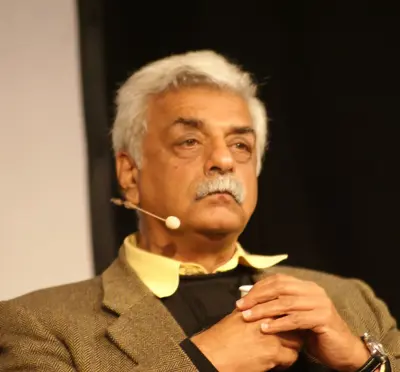
Tariq Ali is a British political activist, writer, journalist, historian, filmmaker, and public intellectual. He is a member of the editorial committee of the New Left Review and Sin Permiso, and contributes to The Guardian, CounterPunch, and the London Review of Books. He read Philosophy, Politics, and Economics at Exeter College, Oxford.
