Edward R. Stettinius Jr. Quotes
The Department has noted with considerable apprehension increasing propaganda rumors and semi-official statements in favor of an autonomous Macedonia emanating from Bulgaria, but also from Yugoslav partisan and other sources with the implication that Greek territory would be included in the projected State. This Government considers talk of "Macedonian Nation", "Macedonian Fatherland", or "Macedonian National Consciousness" to be unjustified demagoguery representing no ethnic or political reality, and sees in its present revival a possible cloak for aggressive intentions against Greece.
Edward R. Stettinius, Jr., 1900–1949, United States Secretary of State, U.S. State Department. Foreign Relations Vol. VII, Circular Airgram [868.014]
Sourced by: Eigen's Political and Historical Quotations


Nationalism produced negative effects on the society ranging from aggression, ethnic cleansing, war and hatred.

Tito did a marvelous job of keeping the lid on the ethnic hatred that was always present. Where he failed however was that as soon as Tito died, the ethnic groups were literally at each others’ throats.
Tito did not realize how right he was. The class issues were relatively easy to resolve into a unified nation, but the ethnic, national, and religious difference and historical hatreds and conflicts were held together during Tito’s lifetime, as he was a very strong leader committed to multiculturalism and imposed it on all of Yugoslavia. However, when he did in 1980, Yugoslavia rapidly flew apart into ethnocentric independent cultures which then went to war with each other.


At the time Turkey and the Ottoman Empire included Egypt and most of the Middle East, Chechnya, Georgia, Armenia, Usbekistan, Ajerbaijon, Greece, Albania, Serbia, Bosnia, Croatia and other countries.


The Serbs were in a conflict with the Ottoman Muslims almost 1000 years ago. However, they have never seen that war as having ended. When the Albanian Muslims were breaking from the weakened Ottoman Empire, the Serbs not only wanted to dominate Albania, but also to extract vengeance for alleged wrongs committed by Ottoman Muslims hundreds of years earlier. This attitude existed through and after the Serbian war and the Kosovo Albanian population would not live under Serbian control given the Serb war crimes and atrocities perpetrated on Muslims—not only in the historical past but even in the Serbian War. Tucovic was one of the very few Serbs who not only argued that the Serbian policy of oppression of the Muslims was not only morally wrong but counter productive from the Serbian point of view. For many Serbs, Tucovic was considered a traitor.

His definition of Russian territory included any area that the Czars claimed which included Poland, the Baltic States, the Ukraine, the Caucuses, but at the time of the speech, Russia was fighting to keep its existing territory.

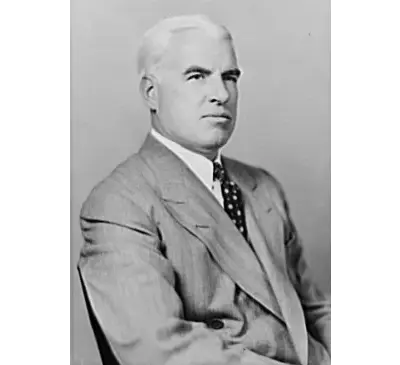
Edward Reilly Stettinius Jr. was an American businessman who served as United States Secretary of State under Presidents Franklin D. Roosevelt and Harry S. Truman from 1944 to 1945, and as U.S. Ambassador to the United Nations from 1945 to 1946.
