Josip Broz Tito Quotes
The role of the Communist Party today lies in the necessity for keeping a sharp lookout to see that national chauvinism does not appear and develop among any of the nationalities. The Communist Party must always endeavor, and does endeavor, to ensure that all the negative phenomena of nationalism disappear and that people are educated in the spirit of internationalism.
Tito did a marvelous job of keeping the lid on the ethnic hatred that was always present. Where he failed however was that as soon as Tito died, the ethnic groups were literally at each others’ throats.
Josip Broz Tito, 1892-1980, President of Yugoslavia, Statement of the Role of the Communist Party in controlling the traditional enmities of the religions and nationalities of the Balkans
Sourced by: Eigen's Political and Historical Quotations

Tito did a remarkable job of suppressing the historical ethnic and religious strife among the nationalities and religious groups of Yugoslavia. Hatred and the thirst for “justice”, nationalism, and vengeance went back 1000 years in the Balkans. However, when Tito died, Yugoslavia collapsed in a resumption of the traditional inter-ethnic hatred and violence.
Tito did not realize how right he was. The class issues were relatively easy to resolve into a unified nation, but the ethnic, national, and religious difference and historical hatreds and conflicts were held together during Tito’s lifetime, as he was a very strong leader committed to multiculturalism and imposed it on all of Yugoslavia. However, when he did in 1980, Yugoslavia rapidly flew apart into ethnocentric independent cultures which then went to war with each other.

After Independence, the original credo of the Indonesian hero and leader was slowly ignored. The Muslim majority established Islam as the dominant religion and began to create laws that discriminated against Christians, Hindus, Buddhists, and Jews. The ethnic Chinese had been very successful in business and commerce and soon they were discriminated against and even physically attacked in Pogroms.


Ingersoll was considered to be the greatest orator and political thinker of his day, but his overt atheistic views curtailed his elected political career.

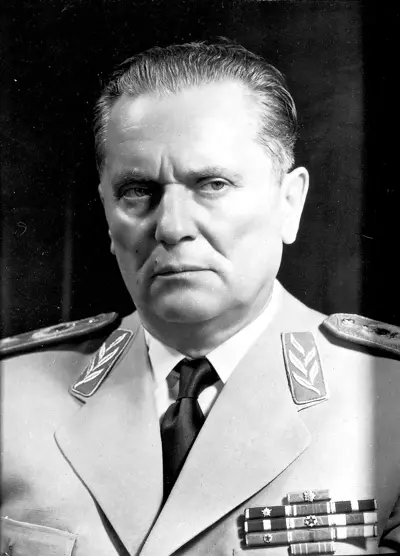
Josip Broz, commonly known as Tito (/ˈtiːtoʊ/; Serbo-Croatian Cyrillic: Тито, pronounced [tîto]), was a Yugoslav communist revolutionary and statesman, serving in various roles from 1943 until his death in 1980. During World War II, he was the leader of the Partisans, often regarded as the most effective resistance movement in occupied Europe. He also served as the president of the Socialist Federal Republic of Yugoslavia from 14 January 1953 until his death on 4 May 1980.
