Laisenia Qarase Quotes
Fiji can make a similar report on the US on all those issues. Our report would be far worse than the US state department's report on Fiji.
Laisenia Qarase, Prime Minister of Fiji, Statement reacting to a US State Department report critical of race relations in Fiji, March 2, 2005
Sourced by: Eigen's Political and Historical Quotations


At the time Dulles was the Assistant Secretary & Near East Division chief of the State Department. The Turks were killing, starving and displacing Armenians—Mostly Christians—in Turkey. Like modern ethnic cleansing and genocides such as Kosovo, Rwanda, and Sudan, the magnitude of the atrocities was denied by the perpetrators and their apologists and other countries did not want to publicly admit the genocide lest they be forced to intervene by public opinion. Previously, the Armenians had slaughtered many Turks, especially the Armenians allied with Russia, and the two groups to this day have a continued distrust of each other—see {51838}, {638251}, {620602}, {620603}, {620604}, {620605}, {620600}, and {620606}

The United States, since its inception has always had an empathy for other peoples who sought independence, but at the same time we had an early principle of isolationism and not getting involved with quarrels abroad. Also America was inhibited by other unrelated issues from assisting people seeking independence.


Said was commenting on the furor that developed in 1989 when Iran Ayatollah Khomeini issued a Muslim legal opinion—a fatwa--calling for the death of, and offered a bounty on, Salman Rushdie whose book, Satanic Verses, contained material to which they objected as blasphemy:
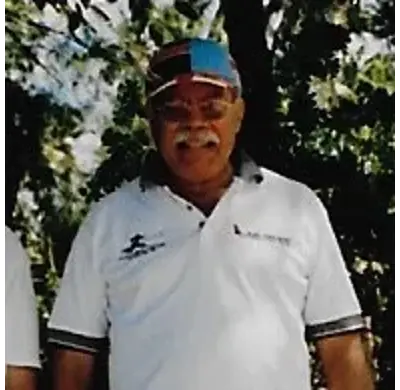
Laisenia Qarase was a Fijian politician. He served as the sixth Prime Minister of Fiji from 2000 to 2006. After the military quashed the coup that led to the removal of Mahendra Chaudhry, Qarase joined the Interim Military Government as a financial adviser on 9 June 2000, until his appointment as Prime Minister on 4 July. He won two parliamentary elections, but a military coup removed him from power on 5 December 2006. He was later imprisoned on corruption charges brought by the military-backed regime.
