Francis Scott Key Quotes
The Defense of Fort McHenry
The poem’s words later became the words to The Star’s Spangled Banner which was adopted as our national anthem. There are some who have objected to this inclusion in this collection on the grounds that Key, as the Washington District Attorney, very harshly suppressed the anti-slavery movement that was
Francis Scott Key, 1780-1843, DC District Attorney, Poet and Presidential Negotiator with the British, Title of the poem he wrote while watching Fort McHenry being shelled during the War of 1812
Sourced by: Eigen's Political and Historical Quotations

He drove the British into the sea when no one expected that outcome.


Nearly two years after Tripoli had declared war against the United States, the U.S., after much deliberation, decided to stop negotiating a tribute settlement with Tripoli. The U.S. launched their attack on June 11, 1803 in what would be the first amphibious operation on the Barbary Coast. After witnessing the operation, the Pasha was unmoved. Piracy and war was a way of life for the Barbary states.

This quotation is yet another documentation of Blacks fighting and dying for America’s freedom. What is particularly interesting is that the Blacks fought as an integrated fighting unit with white sailors and marines. Most sailors and marines of the day had experience working with free Blacks many of whom served on American whaling ships and merchantmen. Working with Blacks was to them not as unusual and unheard of as typical white landlubbers would perceive. An experienced sailor, Commodore Barney had also likely commanded Black sailors before. Ironically, segregation of the navy and discrimination would become much worse as the politics of Reconstruction played out in America.

The 3rd verse is rarely sung because of its reference to the then existing and generally accepted system of indentured servitude and slavery.


With a professionalized all volunteer military, most of whom came from just a few socio-economic strata of our society, wars at the time were fought and the risks and burdens borne by a small part of American society. The rest of society, unlike the Second World War did not experience any change in their style or standard of living.


Washington was describing the British strategy at the start of the war. The expectation was not only that of the British high command in America but was the prevailing expectation in the Court, Parliament, and the media in London. British critics of the military strategy point to this as a key reason the British lost the war in the end. Instead of waiting for the American troops to fall apart during the hard winter and gain a cheap and easy victory, the critics argue that the British should have initiated full scale attacks on the weakened and ill provisioned American soldiers.

Japan and 7 Western countries had sent military troops to China ostensibly to protect “foreigners” who were the victims of the irrational violence of the Boxer Rebellion--{641726} and {641727}. The Chinese government was unwilling and/or unable to suppress the Boxers--{641838}. Regardless of the justification, this was an act of war—an invasion contrary to international law. The Chinese national forces were not only too weak to take on the Boxers but were no match for the 8 powers’ well equipped military forces. None-the-less, the Empress decided to fight. In the early fighting the Chinese Imperial forces killed the German Minister to China, Baron von Ketteler, thus precipitating full scale war.

He was leading the Gordon Highlanders of the British Army against the Boers during the Boer War. He was seriously wounded and could not go on himself with a charge he had ordered, However, waifing his sword he made this famous qutation. Particualrly noteorthy is the derrogatory terms which he used to describe the enemy--the Boers of South Africa. In many wars and cultures, one or more of the combatants, in order to overcome the avarage soldier's reluctance to kill an enemy, characterizes them as less than human. In this case, vermin, who were to be exterminated. There were two predominant groups of whites who came to South Africa, the English who were generally well-educated and were interested in trading with the exhisting inhabitants and investing in businesses using mostly native labot and the Boers. The latter were of Dutch and German origin, poor farmers with little or no land in the home country and little education. Their interest was to create a nation where they could own land to farm. And the lest expensive way for them to increase their farmland was to sieze it from the native Blacks and who were the major forces behind the racial discrimination which became apartheid. The British contolled the government and sought stability and as in most of the British Empire, they wanted English law to prevail including the rights of the Black natives. The Boers had left Europe for good and would thrive or not in Southern Africa. Proportiopnately, the English might have a career in South Africa or serve there for a few years. They were Englishmen in a foreign country. The Boers saw themselves as citizens of Southern Africa who were fighting the native Blacks for control of the land. The English legal system would not allow any of the land seizures and political discrimination that the Boers saw as existential for their survival in Africa. Soon, the Boers took more and more of the law into their own hands and saw English rule and dmination as inimical to their interests in Africa and they tried to create their own independent states in Southern Africa. That was the essense of the Boer Wars. Dick-Cunyngham was awarded the Victoria Cross, the highest military decoration of Great Britain, for his exploits in the Afghan War.


When southern states began seizing U. S. Government property, Dix ordered: Although Dix was a Democrat, he broke from his Southern colleagues over the slavery issue and sided with the Republicans on the war.


That is the way he was killed. The phrase, “We are bound to believe that, anyhow” indicates that Stuart really realized how futile the Southern war effort would be but loyalty and patriotism required him to suspend his rational belief structure.

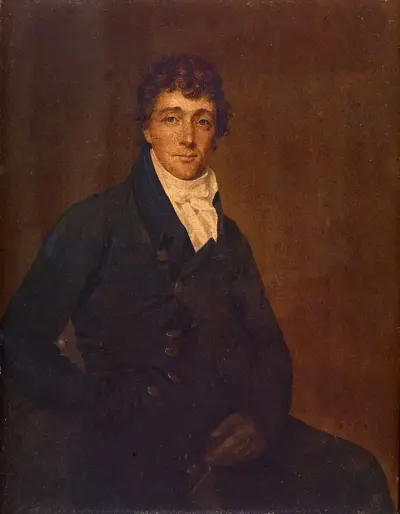
Francis Scott Key was an American lawyer, author, and amateur poet from Frederick, Maryland, who is best known for writing the lyrics for the American national anthem "The Star-Spangled Banner".
