E. B. White Quotes
Americans are willing to go to enormous trouble and expense defending their principles with arms, very little trouble and expense advocating them with words. Temperamentally we are ready to die for certain principles (or, in the case of overripe adults, send youngsters to die), but we show little inclination to advertise the reasons for dying.
E. B. White, 1899-1986, Journalist and Author, "The Thud of Ideas," The New Yorker, September 23, 1950
Sourced by: Eigen's Political and Historical Quotations

Drumbo was morally opposed to war. He also refused to name Hollywood communists to Congressional Committees during the Red Scare. He was then blacklisted from his occupation, screen writing.


The “old” writing to which he was referring was a quotation from Roman Poet Horace. See {589060}.

Ataturk was a young major at the time commanding troops of a weak and corrupt Ottoman regime. However a combined English and French (the strongest military powers in Europe) invasion of the Gallipoli Peninsula threatened to capture the Turkish capital, Constantinople. Ataturk alone rallied the Turkish defenders and fought the invaders to a standoff in long drawn out battle with huge casualties on both sides. Ataturk became a national hero. Although Ataturk thereafter was very reluctant to use military force or endanger troops, the thing he always thought worth the supreme sacrifice (including his own) was the independence and sovereignty of the nation. See {584502} for his continuing belief in this type of sacrifice.


The Chinese were massacred when the Japanese invaded with atrocities against civilians that were inconceivable until Hitler began his in Europe. However, there were many Chinese we worked against the Japanese including the Communists who made a truce with Chiang (see {636322}) so that they could oust the Japanese invaders.


The Turks held and then counterattacked defeating the Greek invaders soundly. The Greeks then retreated and evacuated Anatolia but in vengeance for their defeat, followed a scorched earth policy and committed many atrocities on the Turkish villages they passed through.


On October 31, 1803, Tripolitan forces captured the ship Philadelphia and imprisoned the whole crew. The Pasha (provincial governor) of Tripoli, Yusef Karamanli demanded that the United States not only pay a ransom for the prisoners but an annual tribute to Tripoli.


Mengustu seized power in a coup. However his Marxist Dictatorship was very unpopular and a civil war soon started. The poorly armed opposition used guerrilla warfare insurgency techniques. Since the government was hated by most people there was much support for the guerrilla in the villages and countryside. Mengustu adopted a policy of genocide. The areas of the country which were sympathetic to the revolutionaries were then systematically starved by the government withholding food. There was a bad agricultural crop but international donors including the United States provided much food aid. However this was withheld by the government from the areas where there was any support for the freedom fighters. Over 1 million Ethiopian citizens were starved to death. This quotation was one of the important documents that proved that there was a systematic government policy to commit genocide—in this case to “drain the sea”. After the revolution was successful, Mengustu was convicted of Crimes Against Humanity but escaped to Zimbabwe where he was given sanctuary by his fellow dictator, Robert Mugabe. There is a technical issue of whether or not this was genocide in that the exterminated people were not of one race, religion or ethnic group, but the people who were residents of the areas which were giving “aid and comfort” to the freedom fighters.
Trumbo was morally opposed to war. He also refused to name Hollywood communists to Congressional Committees during the Red Scare. He was then blacklisted from his occupation, screen writing.


Even in democratic America, this has been true. We spend almost any amount of money to give our military the weapons of war that will make them more effective soldiers, but when they return with mental and physical wounds, government money is not so easy to come by to preserve them in good health. Cost is a major consideration in Veterans benefits and care, but weapons expenditures have little restraint. It has been so for many years in many cultures.
This would be like an American President firing the congressional chaplains. However this is only one small, but telling, example of Atatuk’s secularization of the nation which had a great deal to do with Turkey becoming a modern great power—by far the strongest and most developed of the Islamic world.

Even as he was being executed for his many war crimes, the Field Marshal exhibited the mental perspective of Germanic patriotism that had brought Europe as well as Germany itself so much death and ruin.

The Poles were fighting the Russians. Pulaski was a Field Marshall. This was before he had come to America and fought in the American Revolution.
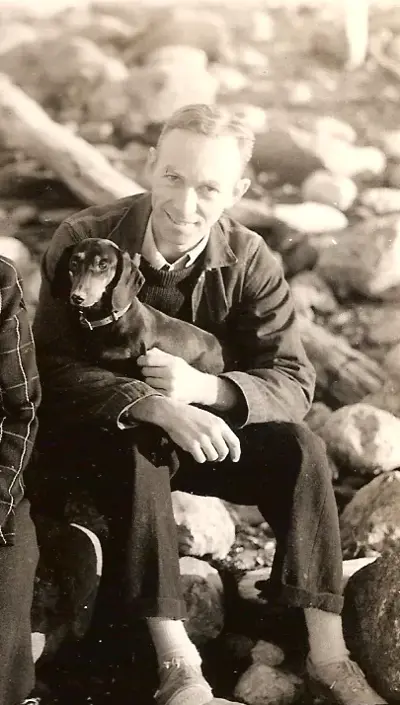
Elwyn Brooks White was an American writer. He was the author of several highly popular books for children, including Stuart Little (1945), Charlotte's Web (1952), and The Trumpet of the Swan (1970). In a 2012 survey of School Library Journal readers, Charlotte's Web came in first in their poll of the top one hundred children's novels. In addition, he was a writer and contributing editor to The New Yorker magazine, and also a co-author of the English language style guide The Elements of Style.
