PAUL JENNINGS

The tale that Dolley Madison personally removed the Washington painting still persists to this day. She probably asked the staff do so if they could, but she had to escape and the staff collected as much as they could before the British reached the White House.
This quotation is yet another documentation of Blacks fighting and dying for America’s freedom. What is particularly interesting is that the Blacks fought as an integrated fighting unit with white sailors and marines. Most sailors and marines of the day had experience working with free Blacks many of whom served on American whaling ships and merchantmen. Working with Blacks was to them not as unusual and unheard of as typical white landlubbers would perceive. An experienced sailor, Commodore Barney had also likely commanded Black sailors before. Ironically, segregation of the navy and discrimination would become much worse as the politics of Reconstruction played out in America.
Jennings had been purchased by Webster and served as his personal butler. As such, and technically a free Black, Jennings had the run of Washington including the Capitol. Webster had freed Jennings with the understanding that Jennings would work off his purchase price. About a year before Jennings had fully worked off his freedom price, he organized a slave escape of Washington house slave by arranging for a ship, the Pearl, to take them North. He wrote his letter to Webster and then went to the docks where the slaves boarded the Pearl. At the last minute, he left the ship and returned to the Webster home feeling that he had given his word and to leave at that time would be dishonorable. The slaves sailed, but were caught by a posse shortly. Most of the slaves were sold as field hands to the deep South, but the white ship’s master, Daniel Drayton, was tried for stealing property. He was defended by Horace Mann, and fined an amount he could not pay and went to jail. The Pearl escape received much notoriety as the escapees were all very “privileged” slaves. Two years later in the Compromise of 1850, selling slaves on the open market was banned in Washington DC. Millard Filmore pardoned Drayton after 4 years in jail. Jennings completed his promise of service and was never prosecuted for his organization of the escape.
This quotation not only gives us a good insight into Dolley Madison’s character and popularity but illustrates the sad fact that until much later there were no provisions made for the retirement and the families of American Presidents. The fact that a former slave actually gave his own money to help support his ex-owner is a testament to her popularity and a poignant story of its own. Daniel Webster incidentally loaned Jennings the money with which to buy his freedom.
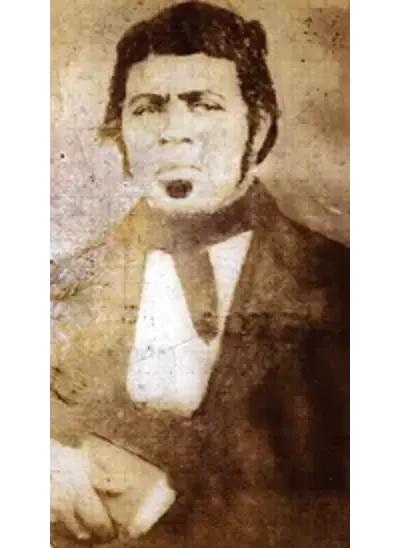
Paul Jennings (1799–1874) was an American personal servant, as a young enslaved man, to President James Madison during and after his White House years. After buying his freedom in 1845 from Daniel Webster, Jennings is noted for publishing in 1865 the first White House memoir. His book was A Colored Man's Reminiscences of James Madison, described as "a singular document in the history of slavery and the early American republic."
