Paul Jennings Quotes
It has often been stated in print, that when Mrs. Madison escaped from the White House, she cut out from the frame the large portrait of Washington (now in one of the parlors there), and carried it off. This is totally false. She had no time for doing it. It would have required a ladder to get it down. All she carried off was the silver in her reticule, as the British were thought to be but a few squares off, and were expected every moment. John Suse (a Frenchman, then door-keeper, and still living) and Magraw, the President's gardener, took it down and sent it off on a wagon, with some large silver urns and such other valuables as could be hastily got hold of. When the British did arrive, they ate up the very dinner, and drank the wines, &c., that I had prepared for the President's party.
The tale that Dolley Madison personally removed the Washington painting still persists to this day. She probably asked the staff do so if they could, but she had to escape and the staff collected as much as they could before the British reached the White House.
Paul Jennings, 1799-?, Former slave of James Madison who, after he purchased his freedom, worked in the Dept. of Interior and then the White House when Madison was elected President, A Colored Man's Reminiscences of James Madison
Sourced by: Eigen's Political and Historical Quotations


This quotation not only gives us a good insight into Dolley Madison’s character and popularity but illustrates the sad fact that until much later there were no provisions made for the retirement and the families of American Presidents. The fact that a former slave actually gave his own money to help support his ex-owner is a testament to her popularity and a poignant story of its own. Daniel Webster incidentally loaned Jennings the money with which to buy his freedom.

Madison was the first Presidential Speech Writer.


This quotation is yet another documentation of Blacks fighting and dying for America’s freedom. What is particularly interesting is that the Blacks fought as an integrated fighting unit with white sailors and marines. Most sailors and marines of the day had experience working with free Blacks many of whom served on American whaling ships and merchantmen. Working with Blacks was to them not as unusual and unheard of as typical white landlubbers would perceive. An experienced sailor, Commodore Barney had also likely commanded Black sailors before. Ironically, segregation of the navy and discrimination would become much worse as the politics of Reconstruction played out in America.

There was a social custom amongst the wealthy women of early American society where if they were moving to a new town, they would present their cards to the established female residents, who would then visit the newcomer at her home. Dolley Madison, anxious to bring some social civilization to Washington, still a rough swamp area, went out of her way to visit all comers and the Cabinet (Department) wives then did the same. However, as the government and Washington grew, this became more and more difficult, and subsequent first ladies wanted more of their privacy and time devoted to family. See {620647} for more.

Franklin and Eleanor Roosevelt were patricians who were so wealthy that the paid little attention to stylish furnishings in the White House or their own mansion. Truman was a plain man who was not interested in furniture and the decoration of the White House nor was his wife. The Eisenhowers who followed were military families who were also not very interested in furnishing and style. Over almost 30 years the White House decorations and furniture were quite threadbare and certainly not stylish to the surprise of many. Ms. Kennedy did a makeover of the White House.

This quotation is very important in that Wood was one of the great political historians of early America and his judgment about the hyperpartisanship of 2012 had reached such extremes that our greatest founding fathers could not have survived in that arena.

He was absolutely right. Actually Lincoln has surpassed Washington. Most historians regard Lincoln as the greatest of the American Presidents.

The Professor just connected a telegraph wire to the balloon tether rope and the observer/telegraph operator in the balloon could describe in real time the position, deployment, weapons and strength of the Confederates. The information was picked up by the Union officers on the ground and a few seconds later by Washington where Abraham Lincoln, a brilliant innovator in the use of telegraph technology, had a telegraph office right next to the White House. Observational intelligence was in real time reaching the Commander in Chief and the war planners not unlike the functionality of a modern observational drone. The graphic is a photo of that balloon preparing for launch.


This statement, along with the cherry tree story, was invented by biographer Parson Weems (Mason Locke Weems). This statement, and the accompanying cherry tree story, didn’t appear in his Washington biography “The Life of Washington” until the fifth edition in 1806.
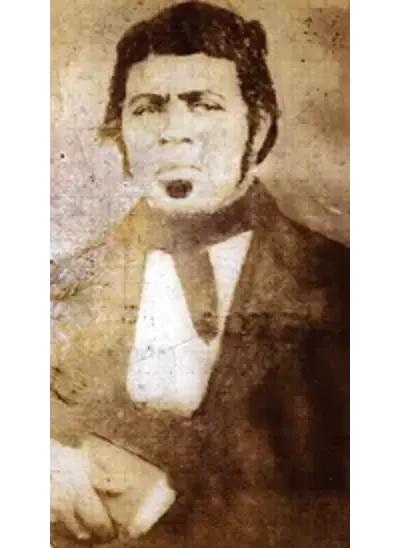
Paul Jennings (1799–1874) was an American personal servant, as a young enslaved man, to President James Madison during and after his White House years. After buying his freedom in 1845 from Daniel Webster, Jennings is noted for publishing in 1865 the first White House memoir. His book was A Colored Man's Reminiscences of James Madison, described as "a singular document in the history of slavery and the early American republic."
