Jacqueline Kennedy Onassis Quotes
It looks like it’s been furnished by discount stores.
Franklin and Eleanor Roosevelt were patricians who were so wealthy that the paid little attention to stylish furnishings in the White House or their own mansion. Truman was a plain man who was not interested in furniture and the decoration of the White House nor was his wife. The Eisenhowers who followed were military families who were also not very interested in furnishing and style. Over almost 30 years the White House decorations and furniture were quite threadbare and certainly not stylish to the surprise of many. Ms. Kennedy did a makeover of the White House.
Jacqueline Kennedy, 1929-1995, First Lady (John F. Kennedy), Journalist and Cartoonist, On the White House; Quoted in A Hero for Our Time (1983) by Ralph G Martin
Sourced by: Eigen's Political and Historical Quotations


There was a social custom amongst the wealthy women of early American society where if they were moving to a new town, they would present their cards to the established female residents, who would then visit the newcomer at her home. Dolley Madison, anxious to bring some social civilization to Washington, still a rough swamp area, went out of her way to visit all comers and the Cabinet (Department) wives then did the same. However, as the government and Washington grew, this became more and more difficult, and subsequent first ladies wanted more of their privacy and time devoted to family. As America grew in importance, more counties sent ambassadors to Washington, and their wives all expected to be visited and invited. See {620648} for more on the “obligations” of a first lady and cabinet wives.

The tale that Dolley Madison personally removed the Washington painting still persists to this day. She probably asked the staff do so if they could, but she had to escape and the staff collected as much as they could before the British reached the White House.
This quotation not only gives us a good insight into Dolley Madison’s character and popularity but illustrates the sad fact that until much later there were no provisions made for the retirement and the families of American Presidents. The fact that a former slave actually gave his own money to help support his ex-owner is a testament to her popularity and a poignant story of its own. Daniel Webster incidentally loaned Jennings the money with which to buy his freedom.


as was the Russian custom Pogodin was one of the “pundits” of his day. This remarkable quotation to the most autocratic ruler in the world, is dramatic in that he is telling the Czar to not be so ostentatious and to cut back on his personal lifestyle and that of his royal family as well. There was no retaliation or consequences that resulted but all his advice was not taken.

There was a social custom amongst the wealthy women of early American society where if they were moving to a new town, they would present their cards to the established female residents, who would then visit the newcomer at her home. Dolley Madison, anxious to bring some social civilization to Washington, still a rough swamp area, went out of her way to visit all comers and the Cabinet (Department) wives then did the same. However, as the government and Washington grew, this became more and more difficult, and subsequent first ladies wanted more of their privacy and time devoted to family. See {620647} for more.


This quotation illustrates a unique aspect about the FDR presidency. It was more open than any previous and most subsequent. Today, some enterprising reporter might find out that the President did not care for the food he was getting for breakfast and lunch and changes were being made. This would be an exclusive and then be echoed by the media. But Mrs. Roosevelt, not only let this type of thing “all hang out” but literally published the story herself. Although few White Houses have done this, it gave the Roosevelt White House one advantage. Since they were the first to report most stories, they could frame the issue before someone else—perhaps hostile could. And no one did this better than Eleanor Roosevelt. Mrs. Nesbitt was the White House Chef, only since she was a woman she was called the “White House Cook”.

Mrs. Nixon put her foot down and the West Wing did not thereafter control and manage the affairs and staff of the First Lady.

Luce was the publisher of Life and Time Magazines, the two most important and influential magazines in the country. Mrs. Truman was a plain woman who most of the time of her husband’s presidency did not even live in Washington DC and she did not participate in politics, and never campaigned. Harry Truman resented the fact that she was be criticized by Mrs. Luce and would not have the Luce’s at the White House thereafter.

She was the first person in politics who realized that with TV, the visual image of the background for the President would be a critical factor. However, it would not be until the Ronald Regan Presidency until the process became a critical political craft if not an art form.


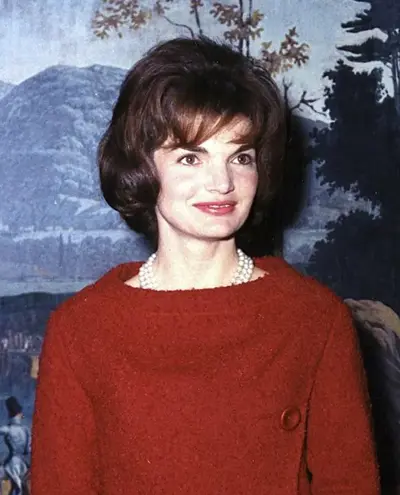
Jacqueline Lee "Jackie" Kennedy Onassis was an American socialite, writer, and photographer who became First Lady of the United States as the wife of President John F. Kennedy. Her popularity as First Lady was due to her devotion to historical preservation of the White House, her fashion sense, and her devotion to her children, which endeared her to the American public. During her lifetime, Jackie was regarded as an international fashion icon. Her ensemble of a pink Chanel suit and matching pillbox hat that she wore in Dallas, Texas, when the president was assassinated on November 22, 1963, has become a symbol of her husband's death.
