Paul Jennings Quotes
Mrs. Madison was a remarkably fine woman. She was beloved by everybody in Washington, white and colored. Whenever soldiers marched by, during the war, she always sent out and invited them in to take wine and refreshments, giving them liberally of the best in the house…. In the last days of her life, before Congress purchased her husband's papers, she was in a state of absolute poverty, and I think sometimes suffered for the necessaries of life. While I was a servant to Mr. (Daniel) Webster, he often sent me to her with a market-basket full of provisions, and told me whenever I saw anything in the house that I thought she was in need of, to take it to her. I often did this, and occasionally gave her small sums from my own pocket, though I had years before bought my freedom of her.
This quotation not only gives us a good insight into Dolley Madison’s character and popularity but illustrates the sad fact that until much later there were no provisions made for the retirement and the families of American Presidents. The fact that a former slave actually gave his own money to help support his ex-owner is a testament to her popularity and a poignant story of its own. Daniel Webster incidentally loaned Jennings the money with which to buy his freedom.
Paul Jennings, 1799-?, Former slave of James Madison who, after he purchased his freedom, worked in the Dept. of Interior and then the White House when Madison was elected President, A Colored Man's Reminiscences of James Madison
Sourced by: Eigen's Political and Historical Quotations

Paul Jennings was at the time a slave belonging to James and Dolley Madison. See {617029} and {618968} for Jennings’ descriptions of them. The $120 gives us an indication of how valuable a slave was at the time. Adjusting for inflation, this would be equivalent to hundreds of thousands of dollars in modern terms.


This statement was the first declaration of a "war on poverty". He never did eliminate poverty, but he did significantly improve conditions in Russia. Wikipedia: "During the first years of his reign, he was both popular and prosperous, and ruled well. He recognized the need for Russia to catch up with the intellectual progress of the West and did his best to bring about educational and social reforms. He was the first tsar to import foreign teachers on a large scale, the first to send young Russians abroad to be educated, and the first to allow Lutheran churches to be built in Russia."

This proverb is a succinct statement of one governmental philosophy of coping with poverty and hardship. It is often uttered when compassion takes the form of intangibles, prayer, advice, training, and search for root causes.

For many religions and ethical systems, it is better to have personal contact with the recipient of charity than to give money.


- Born:
- Nationality:
- Profession: American Enslaved Abolitionist, Author
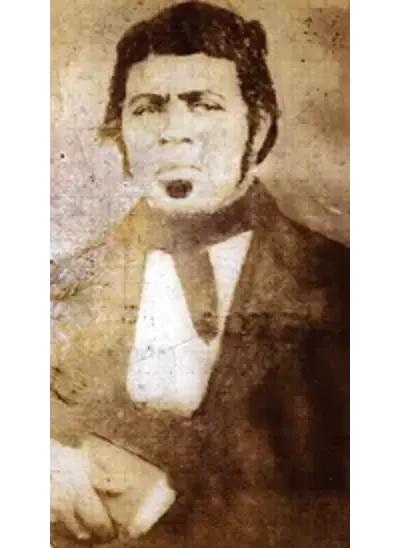
Paul Jennings (1799–1874) was an American personal servant, as a young enslaved man, to President James Madison during and after his White House years. After buying his freedom in 1845 from Daniel Webster, Jennings is noted for publishing in 1865 the first White House memoir. His book was A Colored Man's Reminiscences of James Madison, described as "a singular document in the history of slavery and the early American republic."
