Paul Jennings Quotes
Mr. Madison, I think, was one of the best men that ever lived. I never saw him in a passion, and never knew him to strike a slave, although he had over one hundred; neither would he allow an overseer to do it. Whenever any slaves were reported to him as stealing or "cutting up" badly, he would send for them and admonish them privately, and never mortify them by doing it before others. They generally served him very faithfully. He was temperate in his habits. I don't think he drank a quart of brandy in his whole life.
Paul Jennings, 1799-?, Former slave of James Madison who, after he purchased his freedom, worked in the Dept. of Interior and then the White House when Madison was elected President, A Colored Man's Reminiscences of James Madison
Sourced by: Eigen's Political and Historical Quotations

Paul Jennings was at the time a slave belonging to James and Dolley Madison. See {617029} and {618968} for Jennings’ descriptions of them. The $120 gives us an indication of how valuable a slave was at the time. Adjusting for inflation, this would be equivalent to hundreds of thousands of dollars in modern terms.

Most people only know about Garrison’s abolition crusade. However he had others like temperance.


Hitler neither smoked tobacco or drank alcohol. They appear to have been his only virtues.


Aeneas Sylvius Piccolomini. Early in his career, as Secretary to the Emperor, he was assigned to oversee the education of the young king of Bohemia. Piccolomini’s advice of temperance was not at all based on theological reasons as drinking was rampant, even among the clergy. Also, he recognized the major effect of peer pressure on teenagers as it affects drinking behavior.

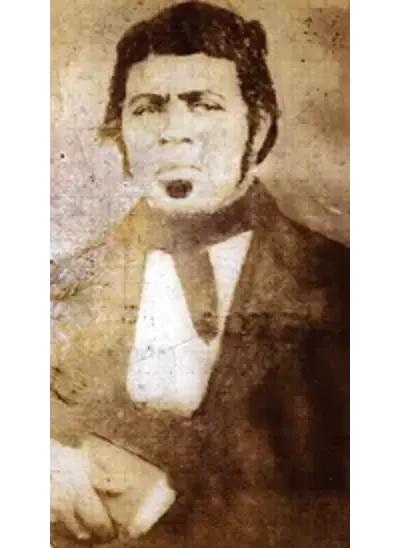
- Born:
- Nationality:
- Profession: American Enslaved Abolitionist, Author
Paul Jennings (1799–1874) was an American personal servant, as a young enslaved man, to President James Madison during and after his White House years. After buying his freedom in 1845 from Daniel Webster, Jennings is noted for publishing in 1865 the first White House memoir. His book was A Colored Man's Reminiscences of James Madison, described as "a singular document in the history of slavery and the early American republic."
