Henry Stephens Salt Quotes
Religion has never befriended the cause of humaneness. Its monstrous doctrine of eternal punishment and the torture of the damned underlies much of the barbarity with which man has treated man; and the deep division imagined by the Church between the human being, with his immortal soul, and the soulless "beasts", has been responsible for an incalculable sum of cruelty.
Henry Stephens Salt, 1851-1939, English Reformer, Seventy Years Among Savages
Sourced by: Eigen's Political and Historical Quotations


Some argue that the modern people who advocate surveillance of most of society are intellectual decedents of the Puritans.

Essentially such a rigid conviction of unbelievers was common with both Protestants and Catholics in the middle of the second millennium, but Christian theology evolved and forgiveness and repentance became major factors. Islam did not so modernize so even in the 21st century a disbeliever deserved nothing from Muslims because Allah would never forgive them and they would be consigned to hell. So this Sura and {584363} made fundamentalist Muslim terrorists particularly willing to kill non-believers.


Referring to one of his harshest critics, Rev. Jerry Falwell:


The congressman was a Biblical literalist. In this case he extended this method of knowing what is or is not potentially dangerous, to the absence of what the Bible says rather than a Biblical statement, If the Bible did not mention such a major event as global warming, it would not come to pass. Scientists are particularly distressed with this kind of analysis observing that there is nothing in the Bible abount nuclear energy, quantum mechanics, or black holes.

He was officially hanged for his offence of making this statement on January 8, 1697. His execution, which raised considerable concern, was the last execution for blasphemy in Britain.

In addition to the immense secular powers that can be used to obtain obedience, in a theocracy, there is the additional weapon of damnation. See {628182} for his use of some of the others.

Action he advocated to his followers who attacked and killed pro-slavery advocates in Kansas. The civil war of Kansas was over whether Kansas would enter the Union as a slave state of a free state. If a free state, the free states would be able to block further slavery. If Kansas were to become a slave state, the slave states would have a sufficient majority to make all future expansion hospitable to slavery. The slavery forces started sending man and families into Kansas so that they could vote; the abolitionists did the same. Both sides armed and a war began with each faction trying to kill or drive the other faction out of Kansas before the vote. See {617388} and {612516}.

As a slave holder himself, this was a dramatic statement. Slavery was immoral, God’s justice will not be on the white slave owners side, a slave revolt or other event could occur and change things radically. One great puzzlement of American history has been why Jefferson, who wrote so eloquently against slavery and predicted the disaster that would come. would himself keep his slaves and never free them as George Washington did. Some argue that he was so broke financially, that he could not afford to free them.
In the early stages of Islam, Muhammad had hoped to convert the Jews and others on the Arabian Peninsula. When they refused to be converted, he warred against them usually killing the men, and taking the women and children as slaves. The result was that non-believing tribes were “cleansed” from the Arabian Peninsula. The Muslims at the time preferred children as slaves. For then they could convert the children against their will. Adults in Islam must accept Islam in order to convert. Children are regarded as having no such maturity of decision making and therefore opposition to conversion may be ignored and they may be forced. Critics of Islam and those who argue that Islam is at odds with all other religions point to this quotation. They claim that it is the only religion whose founder and fundamental scriptures demand war against others for no other reason than that they believe in a different religion. The Catholic Church during the Crusades and the Inquisition had a similar philosophy as did Christian missionaries colonizing Africa later. One difference is that most Christians today repudiate the doctrine as against the true spirit and teachings of Christ and view it as historical error, while very few modern Muslims repudiate this quotation of the Prophet.
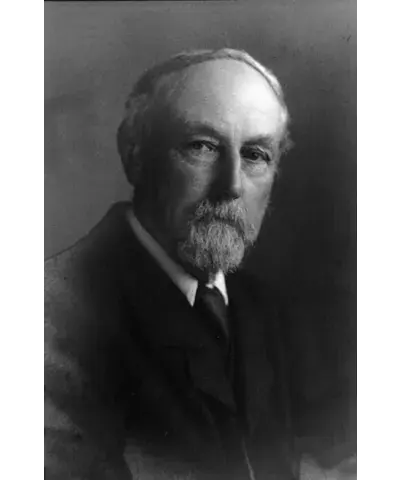
Henry Shakespear Stephens Salt was an English writer and campaigner for social reform in the fields of prisons, schools, economic institutions, and the treatment of animals. He was a noted ethical vegetarian, anti-vivisectionist, socialist, and pacifist, and was well known as a literary critic, biographer, classical scholar and naturalist. It was Salt who first introduced Mohandas Gandhi to the influential works of Henry David Thoreau, and influenced Gandhi's study of vegetarianism. Salt is considered, by some, to be the "father of animal rights," having been one of the first writers to argue explicitly in favour of animal rights, rather than just improvements to animal welfare, in his Animals' Rights: Considered in Relation to Social Progress (1892).
