Jonathan Edwards Quotes
There is nothing that keeps wicked men at any one moment out of hell, but the mere pleasure of God
Edwards, Jonathan. Sinners in the Hands of an Angry God. S. Kneeland and T. Green, 1741, p. 8.

This sura is interpreted by some Islamic fundamentalists as absolution for the killing of a non-Muslim by a Muslim. It was Allah who did it. In a greater sense, critics of Islam observe that many Muslims and Islamic nations have a double standard of responsibility for crimes. If the victims are Muslims, the normal standards of morality hold; but if a non-believer there can be no crime. Terrorism, torture, beheading, mass murder can all be done with a clean conscience if a Muslim takes this interpretation of this sura. Many Muslims however take an opposite point of view. These people do not have the concept of fatalism and lack of free will that others believe. There is a parallel to this problem in Judeo Christian countries although it is less common statistically. But the murder of physicians who perform abortions, and the Jewish radical fundamentalist who killed innocent Arabs at worship are examples of people who viewed themselves as instruments of God in their heinous activities.


As a slave holder himself, this was a dramatic statement. Slavery was immoral, God’s justice will not be on the white slave owners side, a slave revolt or other event could occur and change things radically. One great puzzlement of American history has been why Jefferson, who wrote so eloquently against slavery and predicted the disaster that would come. would himself keep his slaves and never free them as George Washington did. Some argue that he was so broke financially, that he could not afford to free them.


For many extremists Muslims, this sura calls for the torture or killing of the enemies of Islam. For the more moderate Muslims, the penalty of opposing Islam should be expulsion or banishment. The further modern complication of this sura is the definition of “making war with Allah.” To some extremists, it is writing or publishing anything contrary to their view of Islam; it is occupying any Islamic nation or warring with that nation even though the basis of the war might have nothing to do with religion; it is bringing a Bible into an Islamic nations; it is allowing alcohol to be sold and served; it is opposing their discriminatory customs and laws; it is pressuring them not to stone adulteresses.

Referring to one of his harshest critics, Rev. Jerry Falwell:


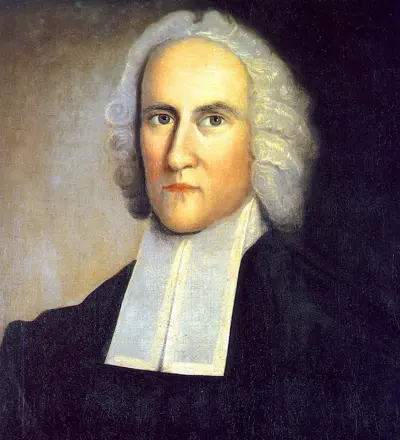
Jonathan Edwards was an American revivalist preacher, philosopher, and Congregationalist Protestant theologian. Edwards is widely regarded as one of America's most important and original philosophical theologians. Edwards' theological work is broad in scope, but rooted in the pedobaptist Puritan heritage as exemplified in the Westminster and Savoy Confessions of Faith. Recent studies have emphasized how thoroughly Edwards grounded his life's work on conceptions of beauty, harmony, and ethical fittingness, and how central The Enlightenment was to his mindset. Edwards played a critical role in shaping the First Great Awakening, and oversaw some of the first revivals in 1733–35 at his church in Northampton, Massachusetts. His theological work gave rise to a distinct school of theology known as the New England theology.
