John Locke Quotes
If any man err from the right way, it is his own misfortune, no injury to thee; nor therefore art thou to punish him in the things of this life because thou supposest he will be miserable in that which is to come.
John Locke, 1632-1704, English Political Philosopher, Concerning Toleration
Sourced by: Eigen's Political and Historical Quotations


This was a practical argument to justify government paying for religious education.

In addition to the immense secular powers that can be used to obtain obedience, in a theocracy, there is the additional weapon of damnation. See {628182} for his use of some of the others.


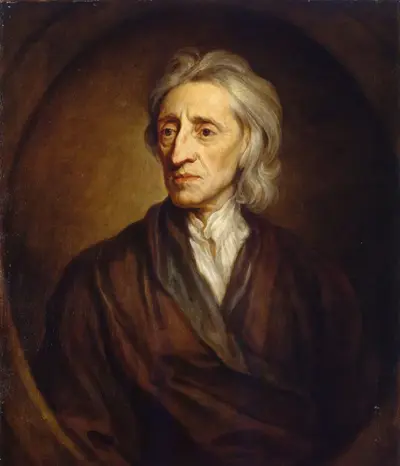
John Locke FRS was an English philosopher and physician, widely regarded as one of the most influential of Enlightenment thinkers and commonly known as the "Father of Liberalism". Considered one of the first of the British empiricists, following the tradition of Sir Francis Bacon, Locke is equally important to social contract theory. His work greatly affected the development of epistemology and political philosophy. His writings influenced Voltaire and Jean-Jacques Rousseau, and many Scottish Enlightenment thinkers, as well as the American Revolutionaries. His contributions to classical republicanism and liberal theory are reflected in the United States Declaration of Independence.
