William Petty Quotes
If we consider how easy it is to elude the Laws of man, to commit unproveable crimes, to corrupt and divert Testimonies, to wrest the sense and meaning of the Laws, etc. there follows a necessity of contributing towards a public Charge, wherewith to have men instructed in the Laws of God, that take notice of evil thoughts and designs, and much more of secret deeds, and that punisheth eternally in another world, what man can but slightly chastise in this.
This was a practical argument to justify government paying for religious education.
William Petty, 1623-1687, English Economist & Demographer, A Treatise of Taxes & Contributions, 1662
Sourced by: Eigen's Political and Historical Quotations

This verse has been one of the bases of Muslim theocratic states like Iran’s claim to legitimacy. The word “govern” is sometimes translated as “judge.” In the context of the 6th century, there were no separation of powers as we know them and judging, governing and legislating were melded.


Essentially such a rigid conviction of unbelievers was common with both Protestants and Catholics in the middle of the second millennium, but Christian theology evolved and forgiveness and repentance became major factors. Islam did not so modernize so even in the 21st century a disbeliever deserved nothing from Muslims because Allah would never forgive them and they would be consigned to hell. So this Sura and {584363} made fundamentalist Muslim terrorists particularly willing to kill non-believers.


People of this era not only saw epidemics as the wrath of God, but also saw military catastrophe, invasion and raids as a punishment of God for the sins of the people of the area.


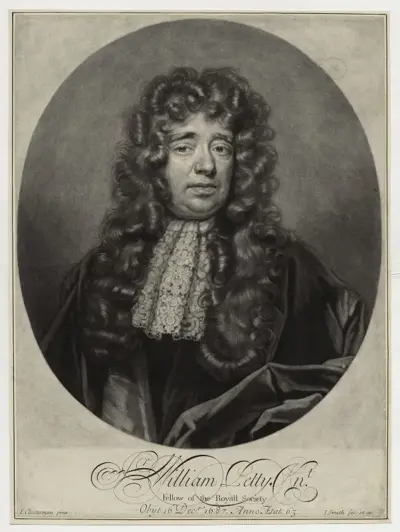
Sir William Petty FRS was an English economist, physician, scientist and philosopher. He first became prominent serving Oliver Cromwell and the Commonwealth in Ireland. He developed efficient methods to survey the land that was to be confiscated and given to Cromwell's soldiers. He also remained a significant figure under King Charles II and King James II, as did many others who had served Cromwell.
