John Stuart Mill Quotes
Prophets were a power in the nation, often more than a match for kings and priests, and kept up, in that little corner of the earth, the antagonism of influences which is the only real security for continued progress.
John Stuart Mill, 1806-1873, Member of Parliament, British Political Economist, Description of Ancient Jewish Society, Representative Government, 1861
Sourced by: Eigen's Political and Historical Quotations

Justinian, like many civil political leaders before and after him, took great pains to minimize the civil authority of the church. Separation of church and state is not a modern notion, though it was harder to accomplish in antiquity. Rulers would want to coopt the religion to help legitimize their rule, but tried to keep the church as weak as they could unless another religion was challenging for supremecy.


Gandhi was asked if the King had offered and encouragement for Indian Independence from England.


Odo of Chatillon-Sur-Marne. Note that the “Divine Right” of monarchy has become a “Devine Command.” Also, that a king was educated (See {591629}) was totally unusual for the times.

There was a continuing power struggle between the more powerful kings of Europe and the Roman Catholic Pope. This struggle however was not one of church and state. Neither the kings nor the clergy viewed the two as separate domains. Instead they saw the two in much the same way as the ancient Jews and many contemporary Muslims view relationship—as an inseparable amalgam. However there was much debate over who could best protect and manage the amalgamated entity. In this case Alcuin was arguing that Charlemagne could ensure the well-being of the church better than the Pope. The power struggle went on for centuries between more or less able, powerful, and corrupt kings and popes.


If the executive can select the legislators, there is really no separation of powers and the checks are only one way—the executive can check the legislature but not the other way around.


Wycliffe, although a Roman Catholic, was an early reformist. He not only opposed the Pope vis a vis King Edward of England, but he went against church doctrine and printed the first English Bible. He was burned at the stake.


The Afrikaner’s were the descendants of the Dutch farmers who were the first white immigrants to South Africa. They ended up dominating the political scene of South Africa and other white minorities had little political power. The Blacks and Coloreds (Indians) had none in the Afrikaner Apartheid regime. This was a constant theme of the Afrikaners to the other White minorities that if the Afrikaner Apartheid and control of the Black majority, the other white minorities would suffer, This turned out not to be true however. When the Afrikaners were pushed out of control, Nelson Mandella led the Blacks to a non-vengeful creation of a new state, where most of the white minorities were reasonably happy except for some of the diehard Afrikaner racists. Botha was the political leader of the Afrikaners.
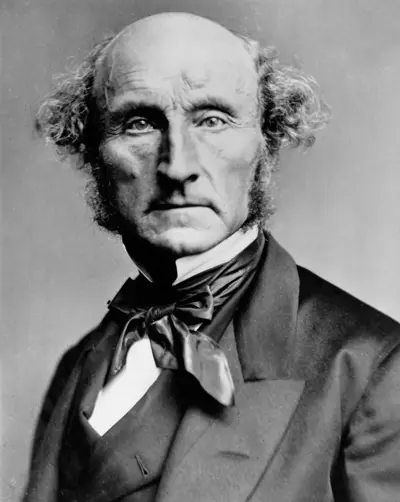
John Stuart Mill, usually cited as J. S. Mill, was an English philosopher, political economist, Member of Parliament, and civil servant. One of the most influential thinkers in the history of classical liberalism, he contributed widely to social theory, political theory, and political economy. Dubbed "the most influential English-speaking philosopher of the nineteenth century", he conceived of liberty as justifying the freedom of the individual in opposition to unlimited state and social control.
