Cesare Beccaria Quotes
Philosophers see no harm in the Jesuits other than in their effect on humanity and the sciences. The vulgar and especially the prejudiced only hate them from an envy and jealousy born out of conspiracy and intrigue at an organisation which overshadows them.


Ingersoll was considered to be the greatest orator and political thinker of his day, but his overt atheistic views curtailed his elected political career.


There is of course no way to tell the sect of a Muslim by physique alone, although there are major behavioral differences. The reason the quotation was newsworthy was that it was amazing that a senior Senate leader was so ignorant of such a critical and problematical subset of the world.
See {623774} for a poem he wrote in Arabic about the battle itself. He had written books in Arabic about Hebrew grammar and language and was the first person to use the Arabic poetic style with its meter and rhyming and used it for writing Hebrew poetry. This poem was so written.

When the priest died, 3 handwritten manuscripts were found written and signed by him in which he attacked religion in general and the church and the Bible in particular. His Testament was read by Voltaire and Denis Diderot among others and he was very influential in their development as opponents of organized religion. This quotation has been one of the bases of secular humanism which would then develop after he had died.

There was an interesting parallel to the Iraq and Afghanistan Wars. When American troops would explain their mission to locals, many were actually fearful of terms like democracy, freedom, education, development and modernity. Religious and cultural forces had made these concepts fearful and undesirable and while there were many who saw these as desirable, there were also many who perceived these as undesirable and even evil. The American military faced the same problem a century ago.


This is a very important historical quotation in that it shows the extensive degree of anti-Catholic prejudice that existed in America in the late 1930s. Most of the anti-Catholic feeling was based in the absurd but real belief of millions of Protestants that the Pope was trying to control America. Then there was the fear and that American Catholics would take political direction from the Vatican and the Catholic bishops. The perception of the Church was hundreds of years out of date. Most of the anti-Catholic bias reduced along with anti-Semitism in the remainder of the 20th century as Americans became much more religiously tolerant. By the 21st century, religious prejudice still existed but it was limited to a small group of Americans whose views were generally condemned by the American mainstream of thought and opinion.

Of all the Western Colonial Powers, Spain was the worst. They took the most from their possessions and contributed the least. Worst, they killed off almost all the indigenous people.


Many Protestant Englishmen were shocked to hear this, having little familiarity with the details of the functioning of the Church of England—the Established Church of Great Britain—in Ireland and the contribution of the Church to the discrimination against Irish Catholics and the poverty of Ireland.


Two were executed and the others sent to the Gulags. This is often quoted to show how hostile the Soviet Union was to all religions.


In the years leading up to the 1787 Constitutional Convention, the weakness of the Articles of Confederation and the Continental Congress were clearly inadequate to govern the new nation. Riots and protests broke out in many parts of the country. Washington asked his associates from the war to determine what was really happening and when he found out, he was as discouraged as he ever was sharing this quotation with only a few friends.


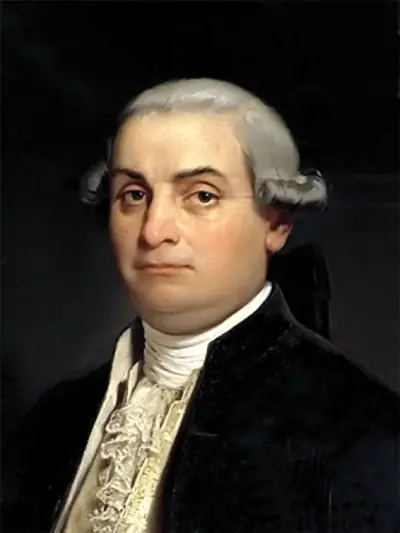
Cesare Bonesana di Beccaria, Marquis of Gualdrasco and Villareggio was an Italian criminologist, jurist, philosopher, and politician, who is widely considered one of the greatest thinkers of the Age of Enlightenment. He is well remembered for his treatise On Crimes and Punishments (1764), which condemned torture and the death penalty, and was a founding work in the field of penology and the Classical School of criminology. Beccaria is considered the father of modern criminal law and the father of criminal justice.
