Herbert Croly Quotes
Our country was thereby saved from the consequences of its distracting individualistic conception of democracy, and its merely legal conception of nationality. It was because the followers of Jackson and Douglas did fight for it, that the Union was preserved.
Croly, Herbert. The Promise of American Life. New York, The Macmillan Company, 1909, p. 86.


The North and the South had major differences on the issue of Spanish Florida and whether or not the U. S. should expand by force. Northerners were generally opposed while the South had an opposite view.

The words are those of President Andrew Jackson. See {604550}. After occupying New Orleans, General Butler infuriated the Confederate Sympathizers with this act. Jackson was the hero of the Battle of New Orleans and an unapologetic slave owner. The Southerners had erected a magnificent statue of their hero Jackson on horseback in a major section of the city. Butler, then ordered that the Jackson quotation be chiseled in the stone base. The townspeople were furious that this Union General would make up words and attribute them to Jackson; however, when they finally realized that Jackson had actually said those words they felt even more humiliated. There are still a few Southernors who consider this terrible insult to the Confederacy, and of course that is just what Butler intended.


Abraham Lincoln’s major political opponent in Illinois agreed with Lincoln on the criticality of preserving the Union from a split off of the Southern States. He tended to be more willing to pander to the South than Lincoln, however they were strong allies on the fundamental issue. However, what the slavery forces in the south wanted and needed to forever protect slavery was not in the power of any President to do, short of ending the democracy. Slavery was doomed in the long run if there was no way to enforce the Supreme Court’s Dredd Scott decision upon (Northern) states whose constitutions and laws made any slave who entered the state free and whose people would not use its police and legal powers to return runaway slaves. It was the abolitionists who won the majority in the battle of public opinion on slavery. It was only a matter of time when slavery would become untenable in the South. Lincoln was unwilling to force the Northern states to return fugitive slaves against the constitution, laws and will of the people of those states as Buchanan said he was (but had a hard time doing). Also Lincoln was unwilling to allow new territories to enter the union if they allowed slavery.

“Sectionalism” really referred to the North / South animosity which carried over from the Civil War. The South would hardly ever elect a Republican as it was the Republican Lincoln Government that ended slavery and put down their rebellion in the Civil War. There was a language difference that was much greater than modern times and the South was way behind most of the rest of the country in terms of education and standard of living. Every time the Federal Government would try and enforce the Constitution with respect to race, the sectional friction would break out again. The sectional issues carried into the 21st century but had gotten much better.


The “mystic chords of memory” which is one of the most famous Lincoln phrases. As great as this address was, it did not succeed in its purpose of maintaining the Union and preventing secession.
At the time his Vice President, John C. Calhoun, was expounding a theory of “nullification” by which the states could supersede and nullify federal law in their states. When Jackson finished his toast, it was Calhoun’s turn (See {635896}.) His toast supported the States’ Rights position over the federal government. In those days Presidents and Vice President’s were often political enemies or of opposite parties. The President’s advisors thought that his toast might be misinterpreted. So when they gave the toast to the press as “The Federal Union: It must be preserved.” That was the form in which the press reported the President’s toast and for many years that was the version most quoted even though it was never delivered that way. However Jackson was responsible for both versions.


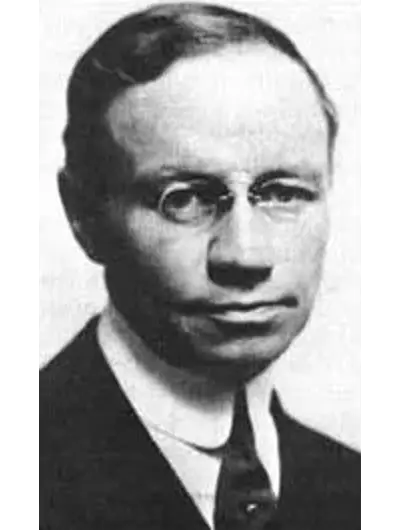
Herbert David Croly was an intellectual leader of the progressive movement as an editor, political philosopher and a co-founder of the magazine The New Republic in early twentieth-century America. His political philosophy influenced many leading progressives including Theodore Roosevelt, Adolph Berle, as well as his close friends Judge Learned Hand and Supreme Court Justice Felix Frankfurter.
