Herbert Croly Quotes
When Jefferson and the Republicans rallied to the Union and to the existing Federalist organization, the fabric of traditional American democracy was almost completely woven.
Croly, Herbert. The Promise of American Life. New York, The Macmillan Company, 1909, p. 48.


One-liner, soundbytes, have been good political oratory long before TV


Abraham Lincoln’s major political opponent in Illinois agreed with Lincoln on the criticality of preserving the Union from a split off of the Southern States. He tended to be more willing to pander to the South than Lincoln, however they were strong allies on the fundamental issue. However, what the slavery forces in the south wanted and needed to forever protect slavery was not in the power of any President to do, short of ending the democracy. Slavery was doomed in the long run if there was no way to enforce the Supreme Court’s Dredd Scott decision upon (Northern) states whose constitutions and laws made any slave who entered the state free and whose people would not use its police and legal powers to return runaway slaves. It was the abolitionists who won the majority in the battle of public opinion on slavery. It was only a matter of time when slavery would become untenable in the South. Lincoln was unwilling to force the Northern states to return fugitive slaves against the constitution, laws and will of the people of those states as Buchanan said he was (but had a hard time doing). Also Lincoln was unwilling to allow new territories to enter the union if they allowed slavery.


Indeed, the control is only one the medium term when after 4 years a President can be replaced by the voters. But a number of President’s have embarked upon foreign policies that was opposed by the majority of the population.


Opposing electronic town meetings and referendums:

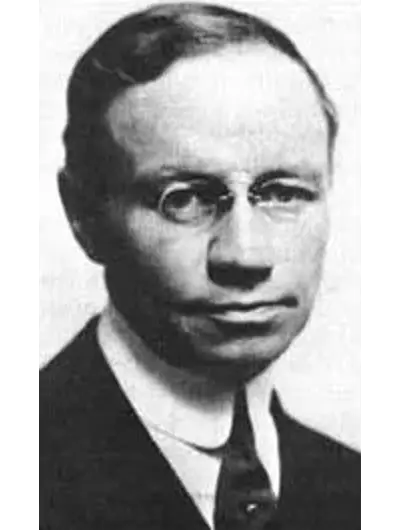
Herbert David Croly was an intellectual leader of the progressive movement as an editor, political philosopher and a co-founder of the magazine The New Republic in early twentieth-century America. His political philosophy influenced many leading progressives including Theodore Roosevelt, Adolph Berle, as well as his close friends Judge Learned Hand and Supreme Court Justice Felix Frankfurter.
