Harold Evans Quotes
Democracy in America is more than a two minute sound byte.
Harold Evans, British Journalist & Editor, Quoted on Bill Moyers, Television in Politics, PBS, October, 1988
Sourced by: Eigen's Political and Historical Quotations


He had been asked by other delegates what Franklin thought they had just created.


This concept was utilized by the U. S. State Department in opposition to the 1992 dissolution of the Peruvian Congress by the President who claimed he was doing it for democratic reasons. See Al Smith for a later expression of this notion.


When ambassador to Great Britain, he was very supportive of the British Fascists, and was an admirer of Adolf Hitler. Once war with Germany was commenced, Kennedy predicted that England would lose the war and became a fascist puppet state controlled by Germany. He opposed Lend Lease and the other efforts of the Roosevelt administration to assist England to fight off the Germans. Ironically his oldest son died in a dangerous volunteermission fighting Germany in the War. Kennedy's earlier pro-German views ended his political career and was an embarassment to his sons when they entered politics.


In most legislatures, the leader of the majority party can usually prevent any proposed legislation from coming to a vote. Many will use that individual power to block any legislation that they do not support. Others like Skelos believes that democracy requires that the entire legislature have the opportunity to vote on an issue and that a single individual or even a majority of the majority should not be able to block a vote as this would disenfranchise the legislators. In this case, the bill was to legalize Gay Marriage—a very controversial proposal. When the vote was taken, 4 Republicans and all but one Democrat voted in favor. The other Republicans and the one Democrat voted against. The bill passed and New York became the first large state to legalize Gay Marriage. Skelos, who opposed the bill, was castigated by conservatives of his own party for not using his power to prevent the vote from ever happening, and putting principle above party.


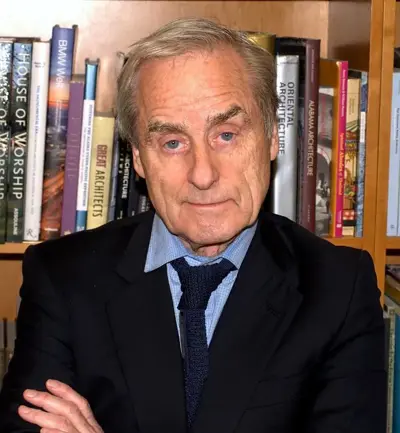
Sir Harold Matthew Evans was a British-American journalist and writer. In his career in his native Britain, he was editor of The Sunday Times from 1967 to 1981, and its sister title The Times for a year from 1981, before being forced out of the latter post by Rupert Murdoch. He was best known for his campaign at The Sunday Times seeking compensation for mothers who had taken the morning sickness drug thalidomide, which led to their children having severely deformed limbs.
